Start cost $0 · First income ~6–12 months · ~$0–$500/mo
Path
At a glance
Contents
🧭 At a glance: is this for you?
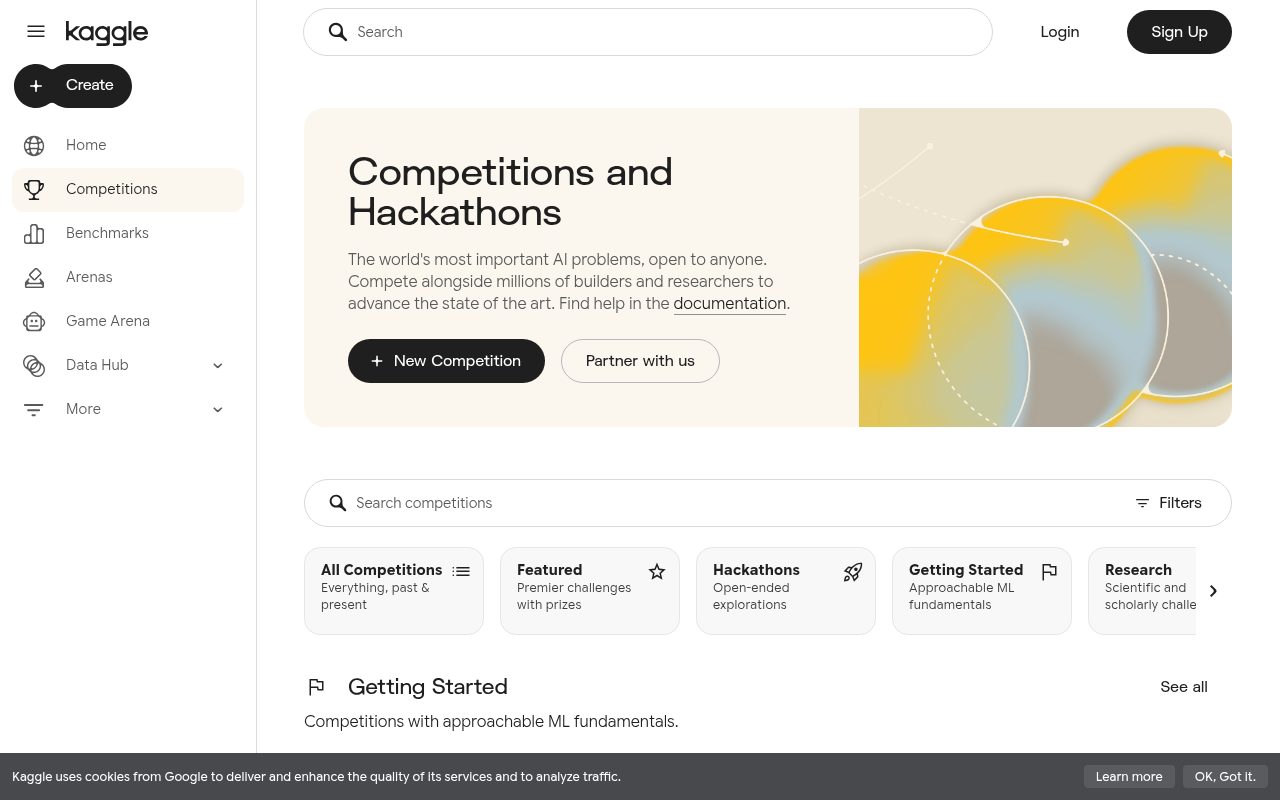
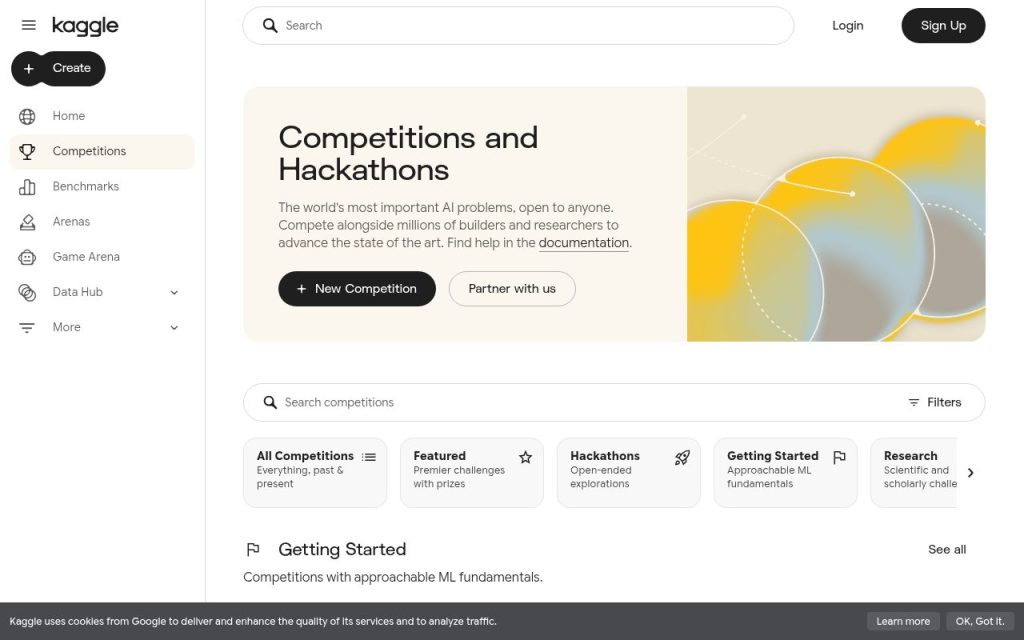
Kaggle hosts machine-learning competitions where companies and research groups publish data and a metric, and teams compete on a leaderboard. Joining is free and Kaggle Notebooks include a free GPU/TPU quota. Prize money goes only to the very top teams and most participants never win any, so the realistic path is to build skill and a record (medals and tiers) first; that record also helps with data jobs and freelance work. This guide explains competition types, a beginner roadmap, how to experiment, and what winners must hand over.
- Best for: People learning or using Python and basic machine learning who can experiment steadily for weeks or months; students building a data portfolio
- Startup cost: $0 (free to join; free GPU/TPU quota in Kaggle Notebooks)
- Time to first income: 6–12 months or longer: prizes go only to top teams, so most people build skill and medals first
- Difficulty: High: the top of the leaderboard is very competitive
👍 Pros
- Free to join, with free GPU/TPU quota
- Real company and research datasets
- Public notebooks and discussions to learn from
- Medals and tiers strengthen job and freelance portfolios
👎 Cons and cautions
- Most participants never win prize money
- Winners must provide reproducible code, documentation and a license
- Country, age and data rules differ per competition
- Leaderboard shake-ups can erase weeks of work
📘 What the full guide below covers: competition types and prize structure, medal and tier rules, a 5-step beginner roadmap, an experiment log routine, team and final-submission tips, winner requirements (code, license, W-8BEN), tax notes, templates, a first-week plan and rule violations to avoid.
💰 Realistic income range (USD estimates)
- Year one for most beginners: $0–$500 in total prizes (most win nothing)
- Indirect income: medals and notebooks can lead to data jobs or freelance projects
- Top finishes in featured competitions: often thousands to tens of thousands of dollars, split within the team
Estimates only, not a guarantee. Rough figures based on publicly listed amounts; results vary by skill, time invested, country and the rules of each platform or event.
🪜 Basic steps (summary)
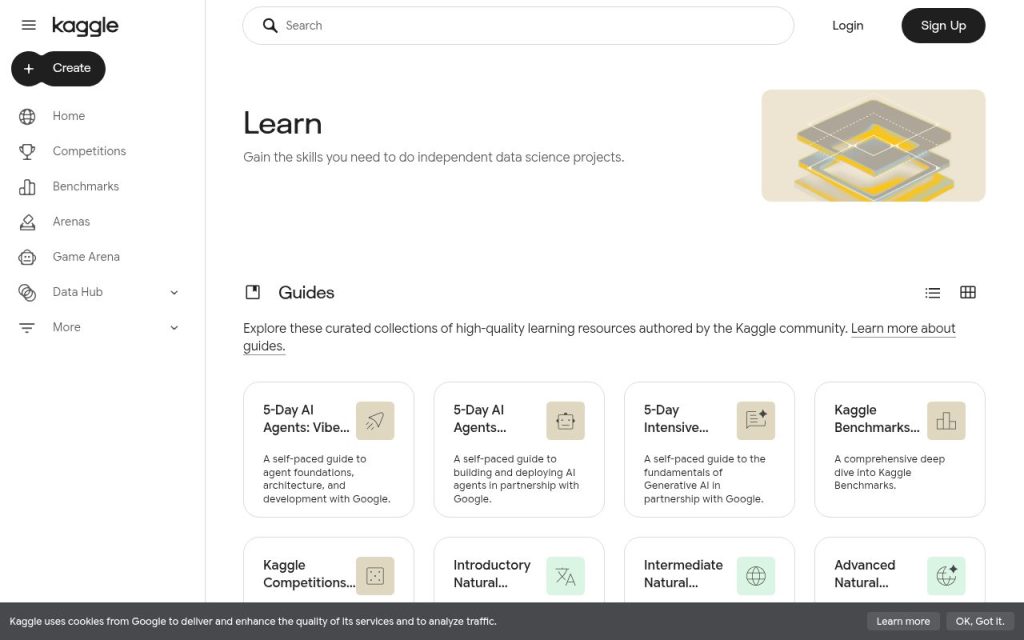
- Take the free Kaggle Learn courses (Python, Pandas, Intro to Machine Learning).
- Make a first submission to the Titanic competition to learn the format.
- Pick competitions that award points and medals and read every rule.
- Rewrite a public baseline yourself, trust cross-validation and log every experiment.
- If you win, submit code, documentation, license and tax forms by the deadline.
Prefer a printable overview? Our compares 30 ways to make money side by side.
📘 Full practical guide (October 2026)
🪜 Step-by-step
- Learn the competition types. Featured and Research competitions list prizes, the metric and the required license in the Rules tab. Getting Started, Playground and Community competitions usually give no medals and no or small prizes; they are for practice. Under Kaggle’s Terms, competitions are skill-based, team prizes are split equally unless all members ask otherwise, and you may join only one team per competition.
- Build basics. Take Kaggle Learn courses (Python, Pandas, Intro to Machine Learning) and make a first submission to Titanic to learn submission files and the leaderboard.
- Pick medal competitions. Check the Overview for points and medals. Per Kaggle’s progression table, with fewer than 100 teams the top 40% get bronze, 20% silver and 10% gold; with 1,000+ teams the top 10% bronze, 5% silver and top 10 + 0.2% gold. Competitions Expert needs 2 bronze; Master 1 gold + 2 silver; Grandmaster 5 gold including a solo gold.
- Build an experiment routine. Read a strong public notebook and rewrite it yourself. Trust your cross-validation score over the public leaderboard, log date, change, CV and public score for every run, and follow the Discussion tab for data or metric announcements.
- Handle teams and final submissions. Note the team merger deadline; merged teams are responsible for all earlier entries. Many people choose one best-CV and one best-public-score submission as their two finals.
- Know winner requirements before you start. Per Kaggle’s competition close process and example rules, winners upload a methodology write-up and reproducible code by a deadline, grant the license the rules require (open-source for many research competitions, non-exclusive or exclusive for some commercial ones), sign prize documents and submit US tax forms (W-8BEN for foreign individuals). Missing these can disqualify you. Some competitions add country, bank-account or tax-ID conditions.
📖 Worked example
Example: a graduate student spent four months on Kaggle: two weeks on Kaggle Learn, a Titanic submission, then two medal competitions with about 1,500 teams. With a careful CV setup and an experiment log she finished in the top 8% once (bronze) and the top 4% once (silver). She won no prize money, but the medals and two well-written notebooks were on her CV when she landed a paid data-labeling quality review contract.
An illustrative scenario based on public rules and typical amounts; real results differ.
💵 Amounts and math
- Prize split: a $12,000 prize for a 4-person team = $3,000 each before withholding and fees.
- Most beginner earnings come indirectly: a medal-backed portfolio can support hourly data work.
- Time math: 150 hours over three months with no prize = $0 direct income; plan it as training time.
- Many competitions have no cash prize; read the Prizes section before investing time.
🧾 Taxes, forms and payouts
- Foreign individuals usually submit Form W-8BEN when claiming a prize; depending on your country and treaty, US withholding may apply.
- Prize money is generally taxable income where you live; keep the winner email and payment record.
- If a rule requires a specific bank account or tax ID, check that you can meet it before competing for the prize.
General information, not tax advice. Check your local tax authority or an adviser for your situation.
🔗 Current tools (links)
- Kaggle Competitions — browse competitions and prizes
- Kaggle Learn — free Python and ML courses
- Titanic competition — first practice submission
- Competition progression — medal and tier rules
- Kaggle Terms — eligibility, teams and conduct
- Competition close form — what winners must submit
- IRS Form W-8BEN — foreign status form
✍️ Copy-paste templates
Experiment log
Date | Change | Validation (CV) | Public LB | Notes
{yyyy-mm-dd} | {feature/model change} | {score} | {score} | {keep/drop and why}
Rules check before joining
Competition: {name} | Deadline (your time zone): {date}
Points and medals? Y/N | Cash prize? Y/N
My country and age eligible? Y/N
External data / pretrained models allowed? {rule}
Winner license: open source / non-exclusive / exclusive
Team merger deadline: {date}
Winner write-up outline
1. Summary of the approach
2. Data preprocessing and features
3. Models and training (hardware, time)
4. Validation strategy
5. What did not work
6. How to reproduce (environment, commands, seed)
📅 First-week plan
- Day 1: Sign up, verify your phone (may be needed for GPU), start Kaggle Learn Python.
- Day 2: Pandas and Intro to Machine Learning courses.
- Day 3: First Titanic submission; look at the leaderboard.
- Day 4: Pick one medal competition and read its rules (country, license, external data).
- Day 5: Read a public baseline, rewrite it, set up cross-validation.
- Day 6: Try one or two new features and log them.
- Day 7: Read discussions and plan three experiments for next week.
🚫 Common mistakes and what to do instead
- Chasing the public leaderboard → trust cross-validation to avoid shake-up.
- Sharing code privately outside your team → only share publicly or within the team.
- Using multiple accounts → prohibited.
- Ignoring external data or pretrained model rules → read them on day one.
- Missing the winner code and documentation deadline → prepare reproducible code as you go.
📚 Related guides
- How to Make Money with AI Training & Data Annotation
- How to Make Money with AI Training & Evaluation Jobs (RLHF, Expert Raters)
- How to Make Money with Web Scraping & Data Collection Services
- How to Make Money with Bug Bounty Hunting
- Wise vs Payoneer vs PayPal: Best Way to Get Paid Internationally
- Taxes When You Make Money on the Side: The Basics Every Freelancer Should Know
Last updated: October 28, 2026.
Want to run Kaggle Competition Prizes as a 30-day plan? The PDF guide (one-time .99) compares 30 methods with steps and income estimates. All steps above stay free.
See full guide →FAQ
Is How to Make Money with Kaggle Competition Prizes: A Beginner Roadmap and What Winners Must Submit (2026) a legit way to make money?
Yes, it is legal and used worldwide. Kaggle hosts machine-learning competitions where companies and research groups publish data and a metric, and teams compete on a leaderboard. Joining is free and Kaggle Notebooks include a free GPU/TPU quota. Prize money goes only to the very top teams and most participants never win any, so the realistic path is to build skill and a record (medals and tiers) first; that record also helps with data jobs and freelance work. This guide explains competition types, a beginner roadmap, how to experiment, and what winners must hand over. Results depend on your time, skills and consistency; never pay upfront fees to unknown "opportunities".
What are the main pros and cons of How to Make Money with Kaggle Competition Prizes: A Beginner Roadmap and What Winners Must Submit (2026)?
Pros: Best for: People learning or using Python and basic machine learning who can experiment steadily for weeks or months; students building a data portfolio, Startup cost: $0 (free to join; free GPU/TPU quota in Kaggle Notebooks), Time to first income: 6–12 months or longer: prizes go only to top teams, so most people build skill and medals first, Difficulty: High: the top of the leaderboard is very competitive. Cons: Free to join, with free GPU/TPU quota, Real company and research datasets, Public notebooks and discussions to learn from, Medals and tiers strengthen job and freelance portfolios.
How do I start How to Make Money with Kaggle Competition Prizes: A Beginner Roadmap and What Winners Must Submit (2026) step by step?
The full step-by-step guide is free to read on this page.
🎁 Free: 7-day side-hustle starter checklist
Leave your email and get the free checklist now. No spam, unsubscribe anytime.
Popular guides
- Top 10 Ways to Make Money Starting This Week (Free Checklist)
- How to Make Money as a Student: Legit Ideas (2026)
- Passive Income Ideas: Realistic Options for 2026
- Make Money Online Without Investment: 20 Free Ways
- How to Make Money with AI: 50 Practical Ways (2026)
- How to Make Money From Home: 20 Legit Ways
- Make Money Online for Beginners: 15 Easy Ways to Start
- How to Make Money as a Mom: 16 Flexible Ideas (Work Around Nap Time)
- 16 Legit Ways to Make Money Fast (This Week)
- How to Make Money as a Teenager: 16 Safe Ideas
- 14 Remote Jobs With No Experience Needed
Next method: How to Make Money with GitHub Sponsors: Setting Up Open-Source Sponsorship and Getting Paid (2026) →