Path
Contents
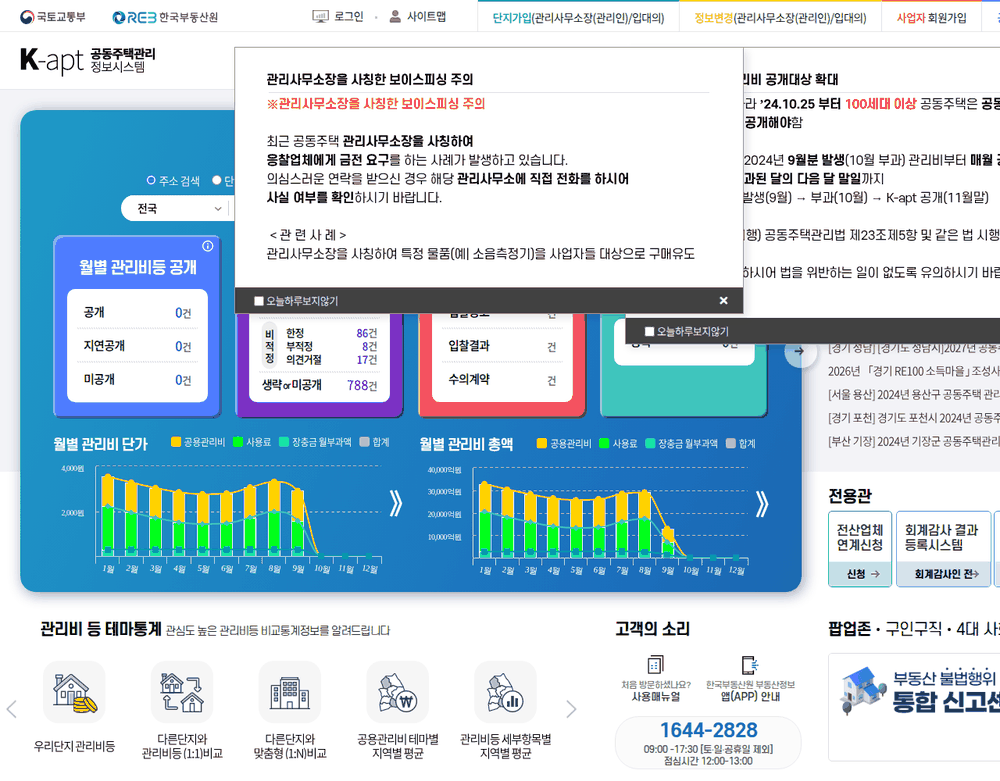
Written on 2026-10-26 after checking public pages from the Korea Real Estate Board, K-apt, Gov24, easylaw and law.go.kr. Comparison figures are only a reference and may differ from your actual bill. No logged-in screens were viewed. The only image is a self-made illustration. Nothing here promises income.
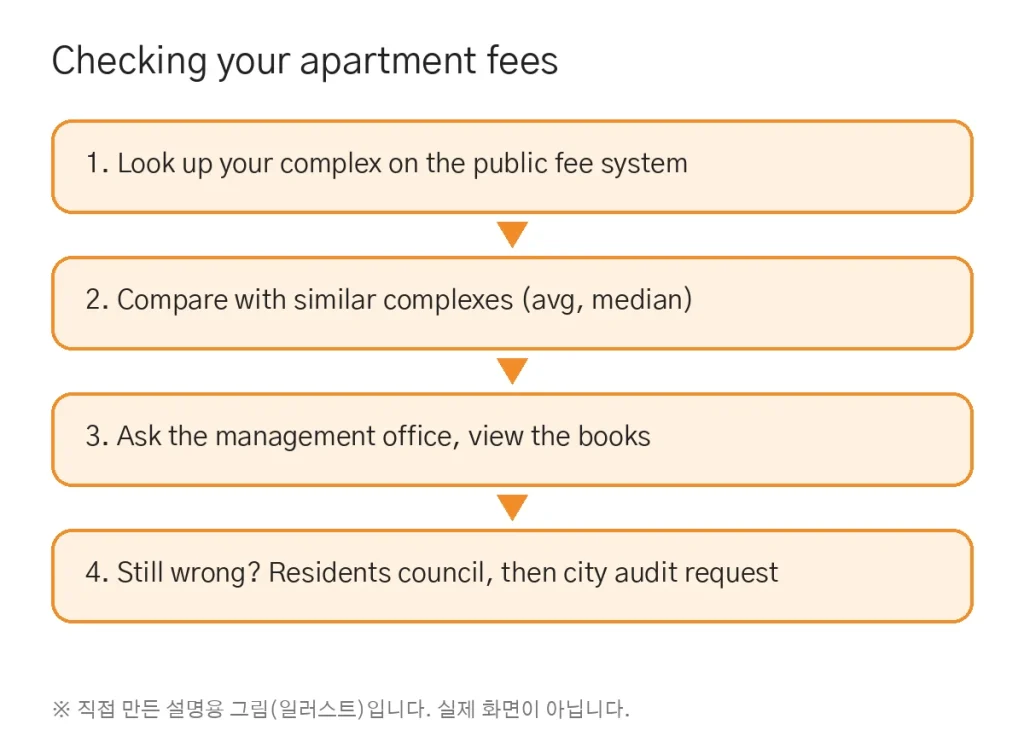
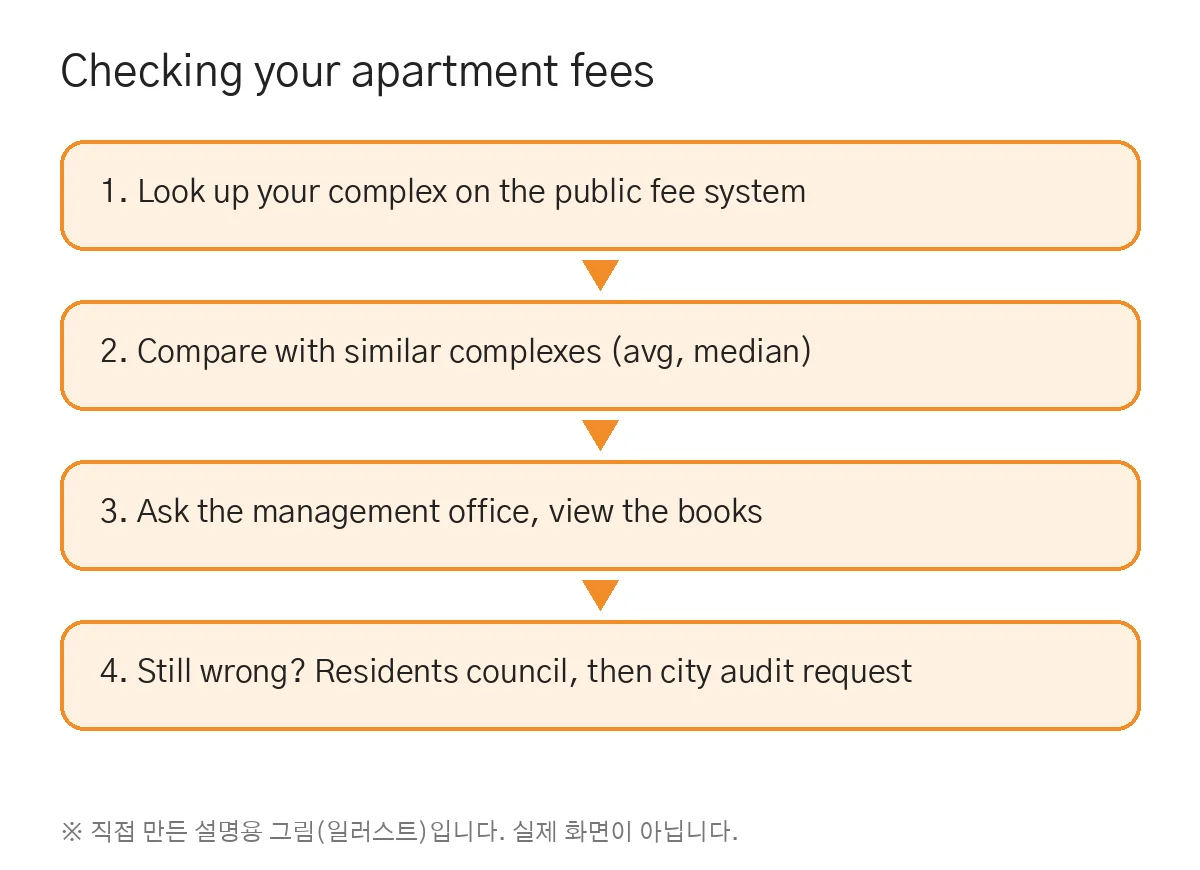
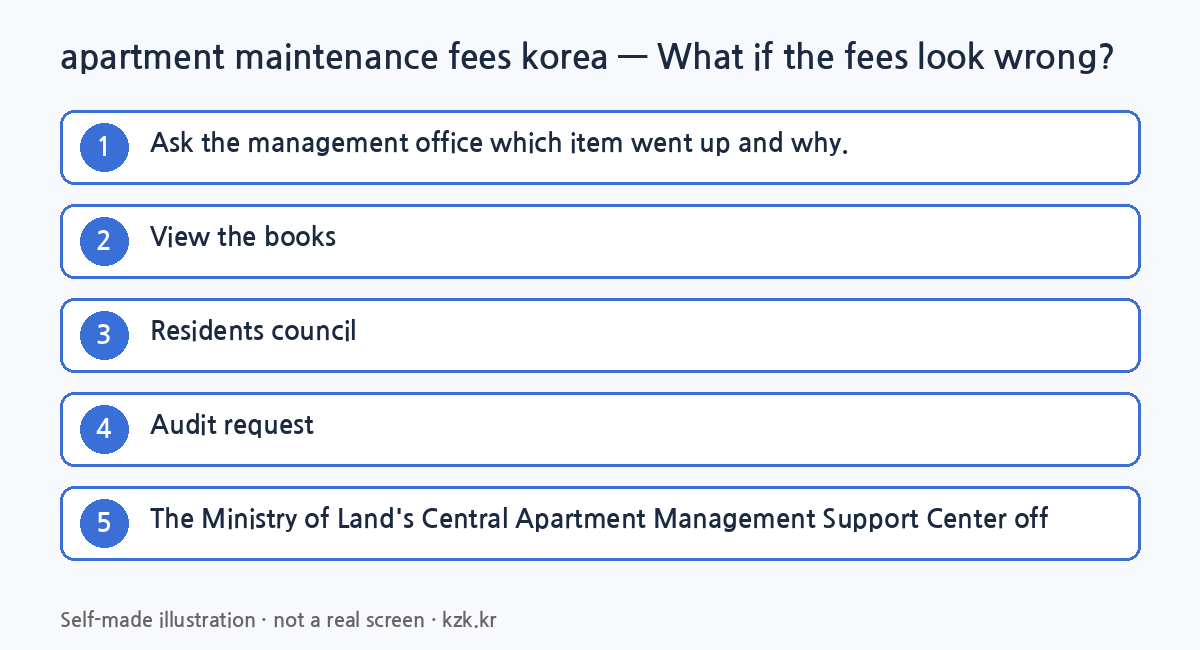
The diagram below is a self-made illustration, not a real screen.
You can check apartment maintenance fees in Korea on K-apt, the Apartment Management Information System, run by the Korea Real Estate Board under the Ministry of Land’s rules. It shows your complex’s fees item by item and compares them with similar complexes.
Who this suits
- People whose maintenance fees went up and want to know why
- People who want to see the fee level of a complex before moving
1. What do you see when you check fees on K-apt?
- 48 fee items, basic complex information (approval date, heating type, number of units, etc.), tenders and results, external audit results, and maintenance history
- Fee disclosure covers complexes of 100 or more units, among others, so small complexes may not appear.
- Mandatory-management complexes must post itemized fees on the complex website, each building’s notice board and K-apt (but not individual households’ bills).
2. How do management fees, usage fees and the repair reserve differ?
- Management fees: shared upkeep such as cleaning, security, pest control and elevator maintenance
- Usage charges: electricity and water (including shared facilities), gas, heating and hot water in district-heating complexes, septic and household waste fees, whole-building insurance, residents council and election committee costs, and the TV license fee
- Long-term repair reserve: money set aside for major repairs later, kept in a separate account
3. How do you compare with the average?
- When you search a complex on K-apt, it shows similar complexes (by age, size, etc.) alongside the average and median for mandatory-management complexes.
- The comparison may differ from your own bill. Heating type, number of units, floor area, building age and staffing all affect it.
4. What if the fees look wrong?
- Ask the management office which item went up and why.
- View the books: residents and tenants can ask to see the ledgers and supporting documents, or copy them at their own cost (personal information and similar are excluded). Refusing can lead to a fine. Records are kept for 5 years.
- Residents council: it oversees how fees are spent, so you can ask for the issue to go on its agenda.
- Audit request: if you suspect a breach of the law or the management rules, you can get consent from at least 20% of all residents and send a written request, with reasons and evidence, to the city, county or district office.
- The Ministry of Land’s Central Apartment Management Support Center offers consultations.
Common mistakes
- Assuming something is wrong just because you’re above the similar-complex average
- Mixing up usage charges and management fees
- Making an audit request verbally, without evidence
Checklist
- ☐ Itemized fees for your complex checked on K-apt
- ☐ Compared with the similar-complex average and median
- ☐ Management office asked about items that went up
- ☐ Book viewing requested if needed
- ☐ Audit request has 20% consent and written evidence
Related guides
FAQ
Is every apartment on K-apt?
Disclosure covers complexes of 100+ households and some others, so small ones may be missing.
Can I see my own household bill?
No. Item totals are disclosed; per-household bills are excluded.
Is above-average automatically wrong?
No. Heating type, size, floor area, age and staffing all affect fees.
Can I see the books?
Residents can view the books and receipts or ask for copies at their own cost (personal data excluded). Books are kept 5 years.
How do I request a local audit?
With consent from at least 2/10 of residents, submit a written request with reasons and evidence to the city, county or district office.
Read next
- Energy cashback and carbon points guide
- Cut subscriptions and phone bills guide
- Moving declutter and donation guide
We also have a $4.99 PDF guide that collects more everyday money-saving tips. Take a look if it’s useful →
🎁 Free: 7-day side-hustle starter checklist
Leave your email and get the free checklist now. No spam, unsubscribe anytime.
Popular guides
- Top 10 Ways to Make Money Starting This Week (Free Checklist)
- How to Make Money as a Student: Legit Ideas (2026)
- Passive Income Ideas: Realistic Options for 2026
- Make Money Online Without Investment: 20 Free Ways
- How to Make Money with AI: 50 Practical Ways (2026)
- How to Make Money From Home: 20 Legit Ways
- Make Money Online for Beginners: 15 Easy Ways to Start
- How to Make Money as a Mom: 16 Flexible Ideas (Work Around Nap Time)
- 16 Legit Ways to Make Money Fast (This Week)
- How to Make Money as a Teenager: 16 Safe Ideas
- 14 Remote Jobs With No Experience Needed
Next method: Disability Discounts in Korea: Subway, KTX and Phone Bill Reductions (Incl. Low-Income) →