Path
At a glance
Contents
The trout people catch at Korea’s winter ice-fishing festivals, and the orange trout sashimi sold in restaurants, are mostly rainbow trout raised in freshwater farms in Korea. Trout like cold water, so they are farmed mainly where water is clean and cold, such as Gangwon Province. This guide explains how to make money with trout farming, and the risks you must know, based on Ministry of Oceans and Fisheries statistics, National Institute of Fisheries Science (NIFS) materials, the Gov24 permit guide and fisheries trade press.
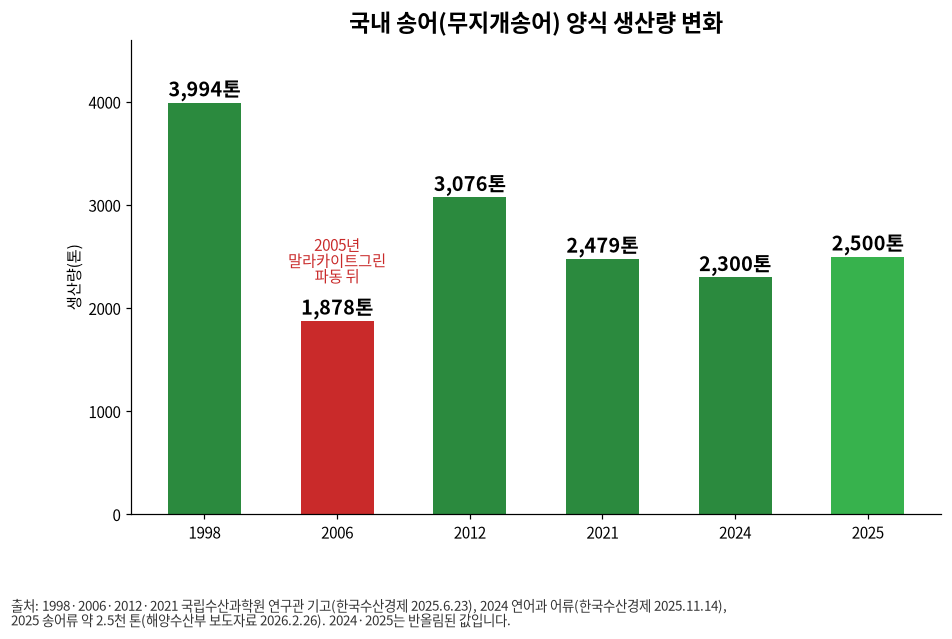
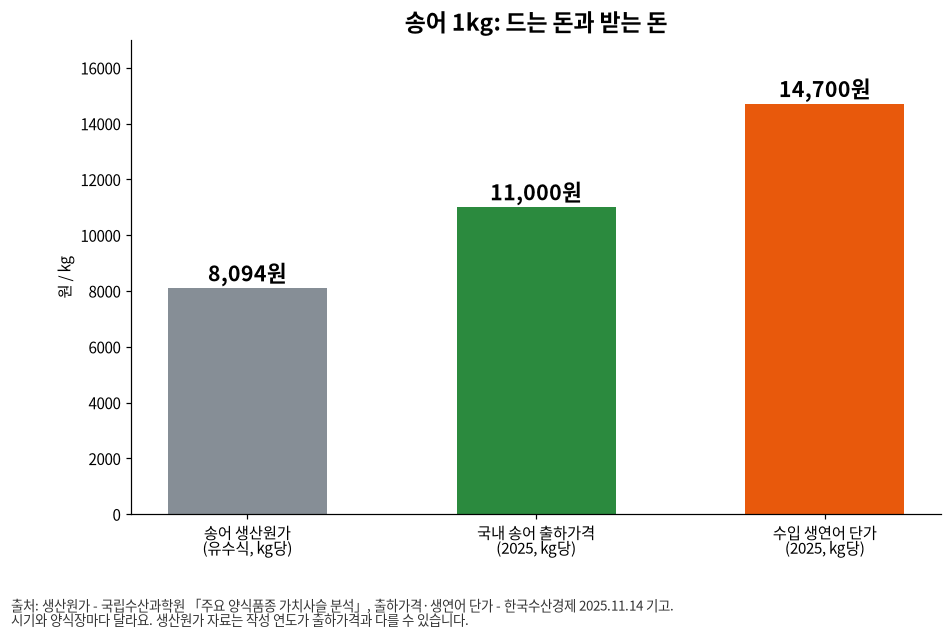
In one line: trout farming income depends on cold water, a permit, feed cost control and sales channels. Korea produced about 2,500 tons of trout in 2025. The farm-gate price was reported at about KRW 11,000/kg (2025 column), and NIFS analysis puts the production cost of flow-through farms at about KRW 8,094/kg. Results swing widely from year to year with heat, floods and fish disease.
1. What is trout farming?
- You raise rainbow trout from fry (young fish) to food size in freshwater (inland) farms and sell them for sashimi or grilling.
- Trout are cold-water fish. Their ideal temperature is about 15°C (±3°C) (Korea Fisheries Economy column, 2025-11-14). When water warms in summer, you must cut feed and add oxygen.
- Korean trout farming began in Gangwon Province in 1965, and Gangwon still produces about 53%. Chungbuk, Gyeongbuk and Jeonbuk also farm trout (NIFS researcher column, Korea Fisheries Economy, 2025-06-23).
- Most farms are flow-through systems that run stream or ground water through tanks. Recirculating systems (RAS) that filter and reuse water, and smart farms, are growing.
- According to the Ministry of Oceans and Fisheries, inland aquaculture produced 44,000 tons in 2025, including about 2,500 tons of trout, up 200 tons (7.1%) from a year earlier.
2. How much does it cost to start?
There is no official average start-up cost. It varies a lot depending on whether you already own land and water (stream or ground water) and how many tanks you build. Key items:
| Item | Details | Note |
|---|---|---|
| Land and water | A site with enough cold water all year | Most important; don’t start if water runs short |
| Tanks and piping | Concrete or FRP tanks, channels, drains | Varies by design |
| Oxygen and power | Aeration/oxygen equipment, backup generator | A power cut can cause big losses quickly |
| Fry (seed) | Buying young trout | Supply is sometimes unstable |
| Feed | Formulated feed | The largest share of production cost |
| Permit | Inland aquaculture permit (city/county/district office) | Fee set by local ordinance |
| Pollution control | Effluent treatment | Larger tank areas face stricter standards |
NIFS publishes a free “Land-based Fish Farm Design Guide.” Read it before designing your tank layout and water flow.
3. Equipment and farming tips
- Water management: measure temperature and dissolved oxygen every day. When water nears 20°C, trout get stressed, so reduce feed and increase oxygen and shade.
- Emergency readiness: check backup generators and spare oxygen for power cuts, floods and droughts.
- Feed control: feed is the biggest cost. Overfeeding fouls the water and wastes money; feed small amounts while watching how much the fish eat.
- Disease prevention: fish diseases such as infectious hematopoietic necrosis (IHN), viral hemorrhagic septicemia (VHS) and white spot are problems in trout. Buy fry from trusted sources and report anything unusual to your local fisheries office or aquatic animal disease authority.
- Only approved chemicals: after a banned substance (malachite green) was found in trout in 2005, production fell sharply. Never use unapproved chemicals.
- Processing equipment (optional): a smoker, a fillet table and a vacuum sealer let you sell processed products. Food processing and sales permits must be checked separately.
4. How much can you earn?
Profit varies by farm with water conditions, feed prices, mortality and buyers. Published figures:
- Farm-gate price: the 2025 Korean trout price was reported at about KRW 11,000/kg (Korea Fisheries Economy column, 2025-11-14).
- Production cost: NIFS’s “Value Chain Analysis of Major Aquaculture Species” puts the cost of flow-through rainbow trout at about KRW 8,094/kg and recirculating systems at about KRW 7,301/kg, with feed as the largest cost. This analysis may be from a different year than the price figure.
- Compared with imported salmon: imported fresh salmon cost about KRW 14,700/kg in 2025, more than Korean trout. Some experts see room for domestic trout to replace part of the salmon market. Korea imports about 54,000 tons of salmon a year (5-year average).
- Example calculation: selling 10 tons a year at KRW 11,000/kg brings about KRW 110 million in revenue. Subtracting KRW 8,094/kg leaves a gap of about KRW 29 million. But mortality, feed price increases and loan interest change this a lot, so this is not an income promise.
5. How do you find buyers?
- Sashimi and trout restaurants: supply restaurants directly. Keeping size and quality consistent matters.
- Fishing ponds and winter festivals: trout fishing ponds and winter ice-fishing festivals use many live trout. The trout festival in Pyeongchang, Gangwon, is well known.
- Direct sales and experiences: an on-site restaurant, catch-your-own fishing and online direct sales can bring higher prices.
- Processed products: smoked trout, fillets, ready meals (HMR) and meal kits have been suggested as ways to compete with imported salmon (NIFS researcher column). Food business registration or permits are required.
- Producer groups: groups such as the Korea Trout Farming Association share sales channels and information.
6. Steps to start 1-2-3
- Learn and find water: take inland aquaculture or fishing-village settlement courses and work at an existing trout farm to learn the skills. Find land with enough cold water year-round, and check summer water temperature and drought-time flow yourself.
- Get a permit: before building tanks, consult your city, county or district office on the land-based inland aquaculture permit (Aquaculture Industry Development Act Art. 43). Submit the application (Form 35), facility drawings (design and layout) and proof of ownership or right to use the site. Processing takes 5 days; apply in person or by post (Gov24). Check effluent treatment standards at the same time.
- Start small and build buyers: begin with a few tanks and record mortality and feed efficiency. Line up restaurants and fishing ponds before harvest, then expand into processed products and direct sales once production is stable.
8. Watch out for these cases
In July 2025, heavy rain in Gapyeong, Gyeonggi Province, flooded streams, and about 120,000 trout at two farms were washed away or died. According to the report, one owner said trout farms were not covered by insurance, so he had to absorb the full loss (Yonhap News, 2025-07-21). Before you start, check that your land is not flood-prone and ask the fisheries cooperative (Suhyup) and local government whether your species can be covered by disaster insurance. Also be careful with offers that ask for facility or investment money upfront, claiming “just build tanks and earn every month.” Check the permit and visit the actual farm before signing anything.
Sources
- Ministry of Oceans and Fisheries, 2025 fishery production trends press release (2026-02-26)
- Korea Fisheries Economy, NIFS researcher column on 60 years of trout farming (2025-06-23)
- Korea Fisheries Economy, “Marking 60 years of trout farming” (2025-11-14)
- NIFS, Value Chain Analysis of Major Aquaculture Species
- NIFS, Land-based Fish Farm Design Guide
- Gov24, Aquaculture permit application
- Korea Law Information Center, Aquaculture Industry Development Act
- Yonhap News, Mass trout deaths at Gapyeong farms (2025-07-21)
7. FAQ
Can I raise and sell trout in a small tank without a permit?
Raising fish on land for sale requires a permit from the mayor, county head or district head. Even if your farm is small, ask the local fisheries office first.
Why are so many trout farms in Gangwon?
Trout like cold water, and Gangwon's stream and ground water is cold and clean. About 53% of production comes from Gangwon.
What is the biggest cost?
Feed. The NIFS analysis also shows feed as the largest cost item.
I'm worried about summer. What should I do?
As water warms, cut feed, increase oxygen and shade, and check your backup generator. It is best to avoid sites where water gets too warm in the first place.
Are trout and salmon the same fish?
Both belong to the salmon family but are different species. Imported fresh salmon is mostly Atlantic salmon; Korean farmed trout is mainly rainbow trout.
Last updated: October 30, 2026. Based on official sources; rules and prices can change.
🎁 Free: 7-day starter checklist for earning extra income
Leave your email and get the free checklist now. No spam, unsubscribe anytime.
Popular guides
- Top 10 Ways to Make Money Starting This Week (Free Checklist)
- How to Make Money as a Student: Legit Ideas (2026)
- Passive Income Ideas: Realistic Options for 2026
- Make Money Online Without Investment: 20 Free Ways
- How to Make Money with AI: 50 Practical Ways (2026)
- How to Make Money From Home: 20 Legit Ways
- Make Money Online for Beginners: 15 Easy Ways to Start
- How to Make Money as a Mom: 16 Flexible Ideas (Work Around Nap Time)
- 16 Legit Ways to Make Money Fast (This Week)
- How to Make Money as a Teenager: 16 Safe Ideas
- 14 Remote Jobs With No Experience Needed
Next method: How to Make Money with Maple Syrup (Overseas Case: Canada and the US) →