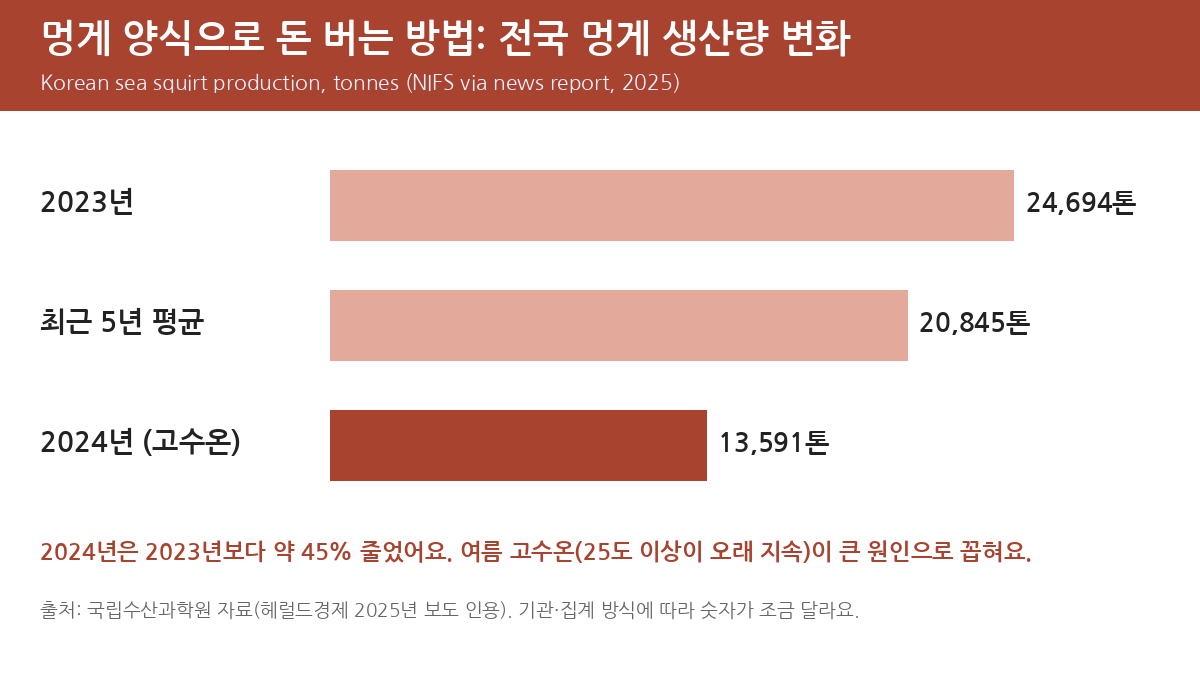
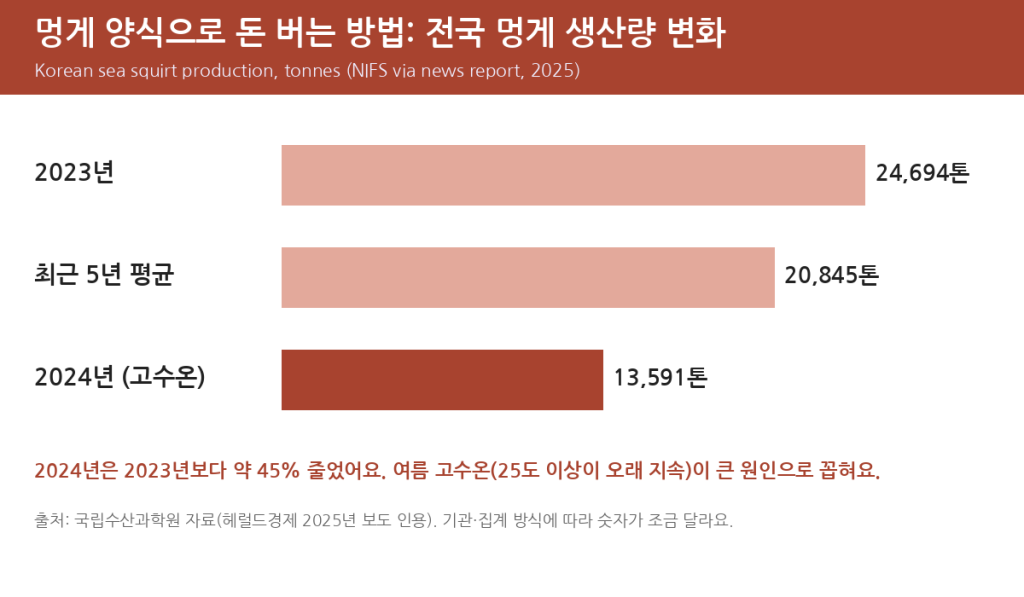
Sea squirt (meongge) is a classic Korean aquaculture product grown on ropes hung in the sea. About 70% of domestic output comes from the waters off Tongyeong and Geoje in South Gyeongsang Province. But in summer 2024, high water temperatures killed most of the stock and national production fell about 45% from the year before. This guide explains how to make money with sea squirts using data from the Ministry of Oceans and Fisheries (MOF), the National Institute of Fisheries Science (NIFS), the Aquaculture Industry Development Act and regional news reports.
One-line summary: Sea squirt farming needs an aquaculture license (or fishing village cooperative membership). Stock is grown about 2 years and sold from February to June. With heat damage increasing, aquaculture disaster insurance and temperature management matter most. Income varies greatly year to year.
1. What is sea squirt farming?
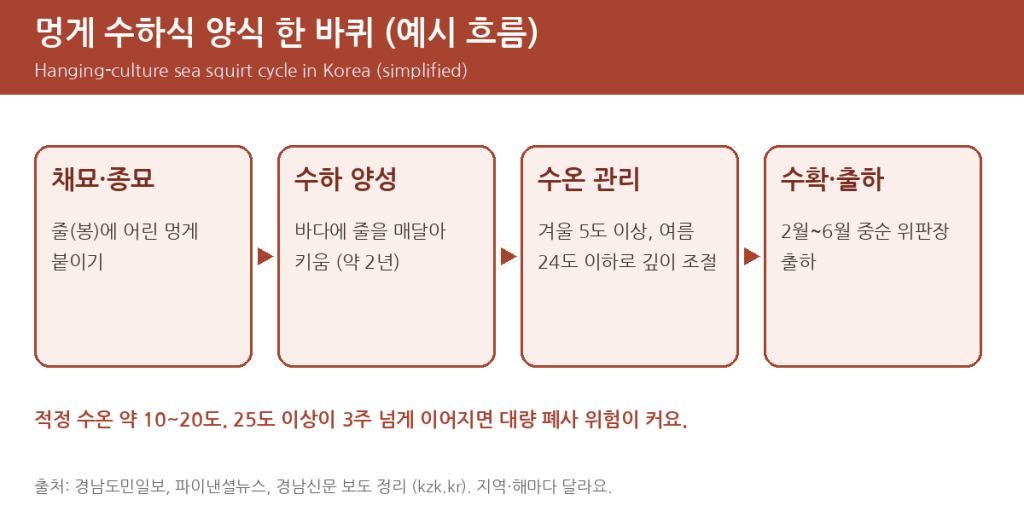
Hanging culture: Young sea squirts (larvae) attach to ropes (about 5 m long) that hang from floating lines. In South Gyeongsang waters they grow at about 3–15 m depth for around 2 years until fist-sized (Gyeongnam Domin Ilbo, JoongAng Ilbo).
Water temperature is key: They grow best at about 10–20°C. If 25°C or higher lasts over 3 weeks, mass deaths can occur (Financial News). Farmers move ropes to depths staying above 5°C in winter and below 24°C in summer.
After harvest: They are kept in clean water for about a day to purge waste before shipping. One kilogram is usually about 8–9 sea squirts.
Who it suits: People preparing to move to a fishing village who can work on boats and do physical labor.
2. How much does it cost to start?
I could not find an official average startup cost, so costs vary by scale and region.
Item
Details
Cost
Aquaculture license (farm site)
New license, license transfer, or using a cooperative site
Varies
Boat
Small boat for site work and harvesting
Varies
Farm equipment
Buoys, ropes, anchors, seed ropes
Varies
Seed (young sea squirts)
Collect or buy
Varies
Work shed
Washing, sorting, shipping space
Varies
Aquaculture disaster insurance
Government pays 50% of the premium
Varies by site
Housing
Home in a fishing village
Varies by region
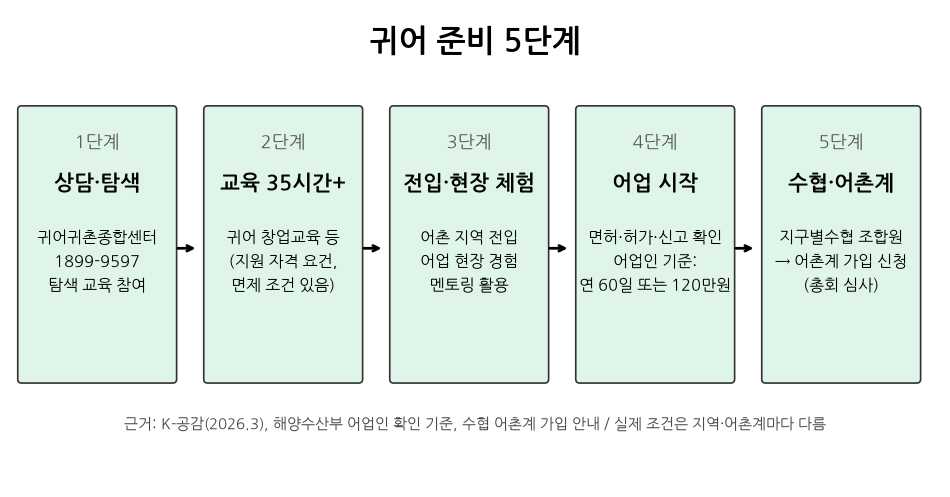
Government support: The return-to-fishing startup loan offers up to KRW 300 million (1.5% a year, 5-year grace, 10-year repayment), and up to KRW 75 million for housing. These are loans with conditions such as training, so first contact the Return-to-Fishing Center (1899-9597).
3. What you need: license and cooperative
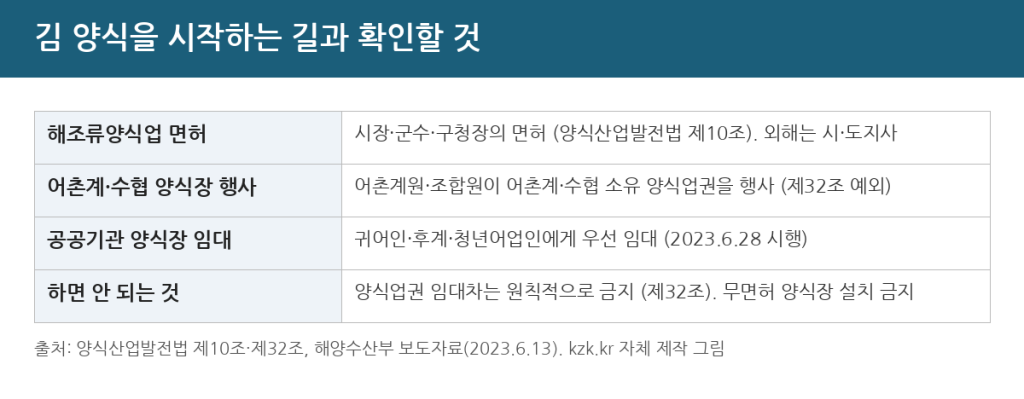
Aquaculture license: Farming sea squirts at sea requires a license under the Aquaculture Industry Development Act (Article 10). Licenses last 10 years (Article 17).
Transfer and no leasing: Licenses can only be transferred as the law allows (Article 30), and leasing a license to someone else is prohibited (Article 32).
Fishing village cooperative (eochongye): Many farm sites are held in the cooperative’s name. According to Suhyup, members must live in the area, qualify as Suhyup members (fishing 60+ days a year), and pass a general meeting review.
Aquaculture disaster insurance: According to MOF, sea squirts are covered, with 50% of the premium paid by the government. The 2024 sign-up deadline for sea squirts was October 31, and a lower-cost plan was introduced. Sign up through Suhyup member cooperatives.
Skills: Temperature monitoring, rope depth control, harvesting and sorting must be learned on site.
4. How much can you earn?
I could not find official average income for sea squirt farms, so income varies. Reference numbers:
Item
Figure
Source
National production
24,694 t (2023) → 13,591 t (2024), about −45%
NIFS (Herald Economy)
2024 losses in Tongyeong
About 95% of seed ropes, 97%+ of whole sea squirts
Gyeongnam Domin Ilbo
Shelled sea squirt price
About KRW 16,000 per kg (2024 report)
JoongAng Ilbo
First auction price
About KRW 250,000 per 10 kg on average (Feb 2026)
Kyeongnam Shinmun
In 2024 so many died that the season’s first auction was canceled for the first time since the market opened in 2011. It resumed in February 2026.
Even with the same stock, summer water temperature alone can push income close to zero. Prepare insurance and emergency funds.
5. Where and how to sell
Suhyup auction markets: Sea squirts from South Gyeongsang are mainly sold at the sea squirt cooperative’s auction market, usually from February to mid-June.
Shelled product: Selling shelled sea squirts changes the price. Processing and sales may need a food business report; check with your city/county office.
Direct sales / delivery: You can sell to direct customers, but freshness (cold shipping) is critical.
Local festivals and restaurants: Supplying local raw-fish restaurants is another option.
6. Step-by-step start
Step 1 – Training and counseling: Take courses at the Return-to-Fishing Center (sealife.go.kr) and visit sea squirt areas such as Tongyeong and Geoje.
Step 2 – Work on site: Work for a year or more on a sea squirt farm to learn seeding, temperature control and harvesting. Building trust with the cooperative also matters.
Step 3 – Check license and cooperative: Officially confirm cooperative membership conditions and license transfer options with the city/county office and Suhyup.
Step 4 – Start small and insure: Begin with a small site and sign up for aquaculture disaster insurance.
Step 5 – Track temperatures: Check NIFS water temperature data daily and lower ropes when high-temperature alerts are issued.
8. Watch out for these real damage cases
In 2012 the Donghae Coast Guard said it had booked the head of a fishing village cooperative in Samcheok, Gangwon Province, for illegally transferring the cooperative’s sea squirt farming right (10 ha) for about KRW 70 million. Buyers in such deals may pay and still not have their rights recognized. When buying or selling a farm site or license, always confirm the license details and transferability at the city/county office, and never trade privately in cash only. Also be careful of offers like “invest in sea squirt farming and get monthly returns.”
No. You need an aquaculture license (Act Article 10), and many sites belong to fishing village cooperatives. Often you must live locally and pass a membership review.
How long until sea squirts can be sold?
Usually about 2 years. After the 2024 mass deaths, some farmers shipped 1-year-old stock instead.
Can heat damage be prevented?
Not completely. Move ropes to cooler depths and get disaster insurance (50% premium support) to reduce losses. A sea squirt farming stabilization task force was formed in October 2024 (JoongAng Ilbo), and in May 2025 NIFS signed an agreement with six organizations to find solutions (Herald Economy).
Can I rent someone's fishing right (license)?
Leasing aquaculture licenses is prohibited by law (Article 32). Offers to "rent you a farm site" may be illegal.
Is return-to-fishing support free money?
No. The startup loan (up to KRW 300 million) and housing loan (up to KRW 75 million) must be repaid.
Last updated: October 30, 2026. Based on official sources; rules and prices can change.
In winter, Koreans use a lot of oysters in kimchi, oyster rice soup and oyster pancakes. Most of the oysters eaten in Korea are farmed in the sea off the south coast. Off Tongyeong, Geoje and Goseong in South Gyeongsang Province, you can see rows of white floats with oysters hanging below. This guide explains, in plain words, how to make money with oyster farming in Korea. It covers licenses, the fishing village cooperative (eochongye), support for people moving to fishing villages, production and prices, food safety and where to sell.
Oyster farming uses the sea, so you can’t just start tomorrow. You need an aquaculture license under Korean law, and most farmers work together with the local eochongye. Don’t think of it as “put money in, get money out right away.” It takes a few years of learning in the field.
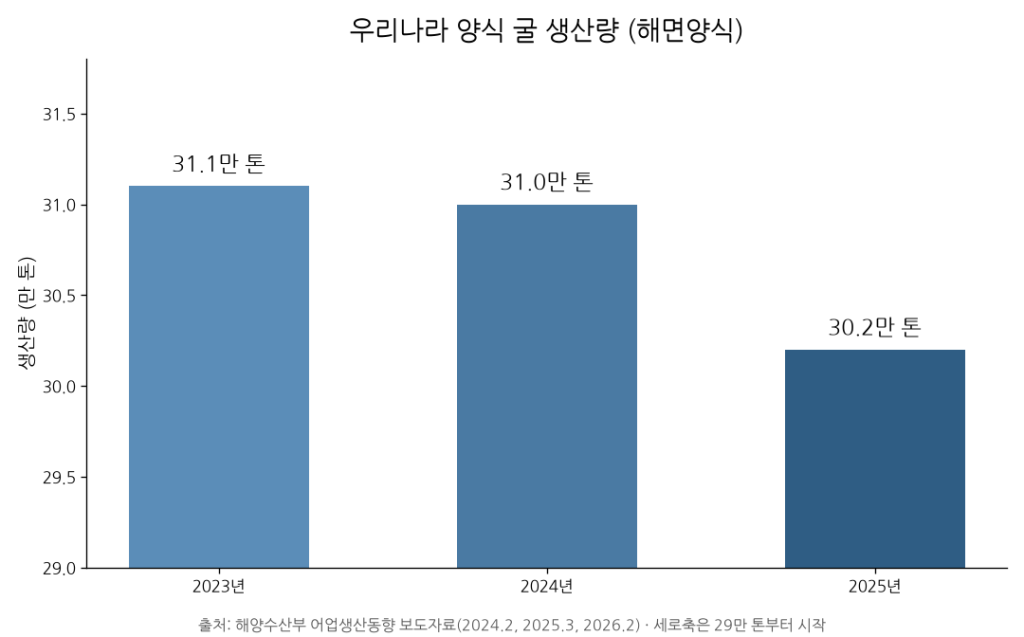
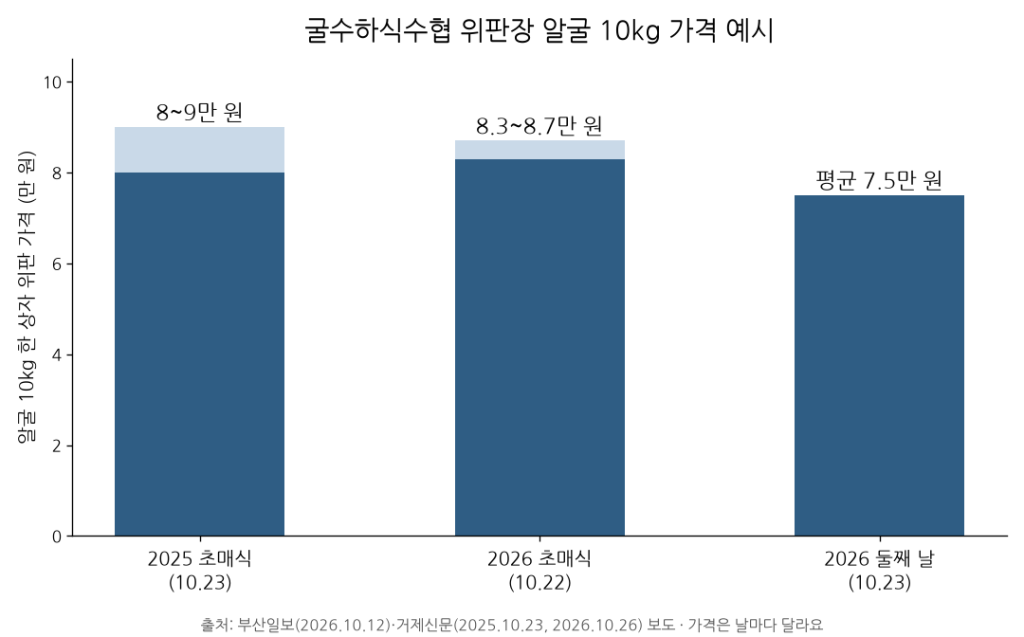
One-line summary: The way to make money with oyster farming is “return-to-fishing counseling and training → move to an oyster area and learn on site → join the eochongye → secure an aquaculture license (or use the eochongye’s farm) → install hanging-culture gear → sell at the Oyster Hanging Culture Fisheries Cooperative auction or directly.” Korea’s farmed oyster output was 302,000 tonnes in 2025. At the first auction of the 2026 season, a 10 kg box of shucked oysters sold for an average of about KRW 83,000–87,000, according to news reports. You must follow food safety rules on norovirus and shellfish toxins.
1. What is oyster farming?
Oyster farming means raising oysters in sea facilities, then shucking them (bakshin) and selling the meat, or selling them in the shell. The most common method on Korea’s south coast is longline hanging culture (yeonseung suhasik).
Hanging culture: Long, thick ropes float on the sea, held by floats and anchors. Strings of young oysters (suhayeon) hang down from these ropes. The oysters stay underwater all the time, eat plankton and grow fast.
Rack culture (geoldaesik): Wooden or steel posts are set in shallow water near shore and oysters are hung on them. They are exposed to air at low tide, so they grow more slowly than in hanging culture.
When are they sold? The first auction of the season (chomaesik) at the Gyeongnam Oyster Hanging Culture Fisheries Cooperative (Gulsuhasik Suhyup) is held in late October each year, and the season runs until about June of the next year, according to news reports.
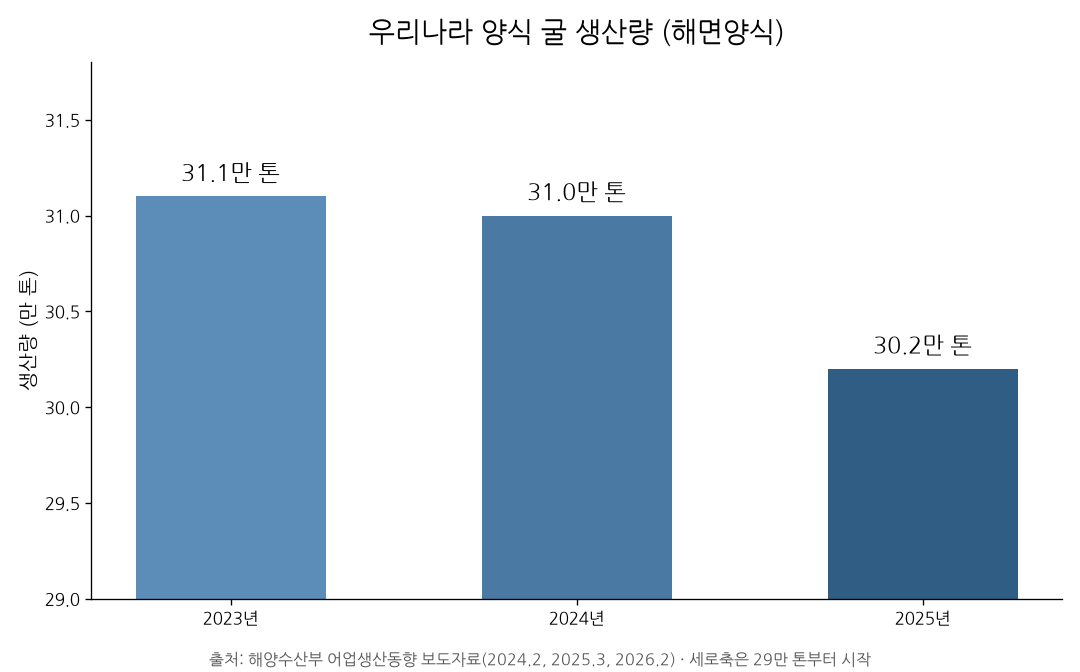
Oysters are a big aquaculture item in Korea. According to the Ministry of Oceans and Fisheries (MOF), farmed oyster production was 311,000 t in 2023, 310,000 t in 2024 and 302,000 t in 2025. Production is concentrated on the south coast, and one report says South Gyeongsang produced about 78% of Korea’s oysters.
Who is this for?
People who can handle sea work, early mornings and cold winter work
People who can move to an oyster area such as Tongyeong, Geoje, Goseong or Yeosu
People willing to spend the first few years learning at someone else’s farm or shucking site
People who can work with villagers and follow local rules
2. How much does it cost to start?
Costs depend a lot on farm size, method and whether you buy a boat. The table only shows numbers confirmed in public research and government sources.
Item
Confirmed figure
Source / note
Longline hanging culture facilities (1 ha)
About KRW 181.66 million (181,657 thousand)
Journal of Fisheries Business Administration paper, Sacheon Bay oyster study (2022). Based on 20 lines and 5,000 strings
Rack culture facilities (1 ha)
About KRW 54.77 million (54,772 thousand)
Same paper
Yearly depreciation (hanging culture, 1 ha)
About KRW 14.80 million (14,798 thousand)
Same paper. The yearly share of wear on the gear
Return-to-fishing start-up loan
Up to KRW 300 million, 1.5% interest, 5-year grace then 10-year repayment
Government policy notice (Mar 2026). Requires selection
Return-to-fishing housing loan
Up to KRW 75 million per household, 1.5% interest
Same notice
License and eochongye joining costs
Varies
Differs by area and village. Ask the city/county fisheries office and the eochongye
Boat, work vessel, shucking site
Varies
Depends on whether you do it yourself or outsource
A loan is borrowed money and must be paid back. The facility figures are examples from one study and may differ from current prices in your area.
3. What you need and how it works
3-1. The law you must know: the aquaculture license
To raise shellfish such as oysters in the sea, you need a shellfish aquaculture license under the Aquaculture Industry Development Act. Licenses are issued by the mayor, county head or district head (Article 10).
A license lasts 10 years and can be extended, but the total extension cannot exceed 10 years (Article 17).
Aquaculture rights can’t be freely bought and sold. They can be transferred only with official approval at least one year after the license was granted, or through inheritance or merger (Article 30).
Leasing aquaculture rights is banned in principle. However, members of an eochongye or fisheries cooperative may use rights owned by that eochongye or cooperative (Article 32).
A license holder also may not let someone else effectively run the business (Article 23).
So beginners usually join an eochongye and use its farm, or ask the city/county fisheries office about a proper legal transfer. An offer to “rent you a license cheaply” may be illegal, so be careful.
3-2. Joining the eochongye
According to Suhyup (the National Federation of Fisheries Cooperatives), you need two things to become an eochongye member:
Membership in the regional fisheries cooperative: You must have an address or business inside the cooperative’s area and fish or work in fishing for at least 60 days a year.
You must live inside the eochongye’s area.
You submit an application and proof of cooperative membership to the eochongye head, and the general meeting reviews and decides. Members pay shared costs and contribute labor, and can be expelled if they don’t use the eochongye’s business for over a year. The general steps of moving to a fishing village are covered in a separate kzk.kr guide on returning to fishing villages, so this guide only covers the parts specific to oysters.
3-3. A year of oyster farming (hanging culture)
Spat collection: In summer, collectors such as scallop shells are put in the sea so baby oysters attach. These are threaded onto strings (suhayeon).
Hanging: The strings are hung from the floating ropes. Check anchors and floats often so typhoons don’t break the gear.
Harvest: Oysters are pulled up from autumn. Some are grown for two years (wolhagul); in 2026, news reports warned of a shortage of these.
Shucking: Oysters are shucked at shucking sites. Reports say there are about 300 such sites in Tongyeong, Geoje and Goseong, each with 20 to over 50 workers.
Shipping: The meat is washed in clean water, packed in boxes such as 10 kg boxes and sent to the auction.
One string normally yields about 3 kg of shucked oysters, and a farmer quoted in a 2026 report said this year it was 4–5 kg. It varies with sea conditions each year.
3-4. Food safety (very important)
Oysters are often eaten raw, so the government regularly tests the sea and the oysters. The points below are not health or treatment claims. They are food safety rules you must follow to sell.
Norovirus: MOF tests oyster-growing waters for norovirus from November to April. When it is detected, oysters from that area must be held back or sold labeled “for cooking only.” The Ministry of Food and Drug Safety says oysters with norovirus can’t be sold for raw eating. MOF material says heating at 85°C or more for over 1 minute removes the virus’s ability to infect.
Shellfish toxins: In spring, plankton can make toxins build up in shellfish. If a limit is exceeded (e.g., paralytic toxin 0.8 mg/kg), the area becomes a no-harvest zone, and shipments need inspection first. These toxins are not removed by cooking or freezing. MOF checks up to 120 points weekly from March to June.
Where to check: Results are posted by the National Institute of Fisheries Science (nifs.go.kr) and the Food Safety Korea portal (foodsafetykorea.go.kr).
Sea hygiene: Some south-coast oyster waters are managed as US FDA designated areas for export. News reports also mention management of floating public toilets and hygiene checks at shucking sites.
4. How much can you earn?
First, know this: oyster farming income varies a lot with farm size, the year’s harvest, oyster prices and labor costs. The figures below are examples from public numbers. They do not mean everyone will earn this much.
Prices (cooperative auction)
2025 first auction: a 10 kg box of shucked oysters sold for about KRW 80,000–90,000 (about 5,800 boxes).
2026 first auction (Oct 22): the first-day average was about KRW 83,000–87,000, with about 6,900 boxes traded, according to a report. The next day (Oct 23), 7,680 boxes sold at an average of about KRW 75,000.
Before the 2026 season, one report said prices reached KRW 110,000–120,000 per 10 kg and were expected to settle in the high KRW 90,000s.
According to an MOF explanatory note (2023), oyster prices tend to be highest in November (kimchi-making season) and lowest in April–May. The May wholesale price was KRW 9,586/kg in 2022 and KRW 7,509/kg in 2023.
Total sales volume
The Oyster Hanging Culture Fisheries Cooperative reportedly auctioned about 10,873 t worth about KRW 93.4 billion last season. Simply dividing these gives about KRW 8,590 per kg (our own calculation).
Example: a 1 ha farm (research data)
According to the Journal of Fisheries Business Administration paper (Sacheon Bay oyster study), a 1 ha longline hanging farm had:
About 15 t of shucked oysters, worth about KRW 105.3 million (105,300 thousand)
A profit rate of 15.2%
Facilities of about KRW 181.66 million, with yearly depreciation of about KRW 14.80 million
A 15.2% profit rate also means that not much is left after costs. Results vary by area, year and the condition of the gear.
Money taken out when selling
According to the same paper, selling through a wholesale market costs about a 3.5% fee plus about 0.5% management cost, and average distribution costs nationwide were about KRW 1,358 per kg. Labor (shuckers), fuel and boxes cost extra.
For reference, the 2024 Fishery Household Economy Survey by the national statistics office found average fishery household income of KRW 63,652,000. This is the average of all fishing households, not just oyster farmers, so don’t treat it as oyster farming income.
5. Where and how to sell
Cooperative auction (gyetong chulha): The most common route. Research says most oysters go through auctions at the Oyster Hanging Culture Fisheries Cooperative and the Yeosu Fisheries Cooperative. The cooperative’s auction house in Yongnam-myeon, Tongyeong, was reported to hold auctions three times a week from Oct 26, 2026. Prices are set by auction and change daily.
Processing and export: About 20% of south-coast oysters are exported as raw, frozen or steamed oysters, mostly to Japan, according to a report. Export products face stricter hygiene standards.
Direct and online sales: Research says online direct sales are growing. When shipping by courier, you need cold packaging, country-of-origin labeling and a check of norovirus and shellfish toxin results.
Festivals and local markets: Autumn and winter oyster festivals, such as those in Yeosu, Tongyeong (Hallyeosudo) and Geoje (Geoje Island Oyster Festival), hold direct-sale markets.
MOF has said it will support adding value to and exporting items such as oysters, laver and flatfish. To grow direct sales, neat packaging and safety test records build trust.
6. Step-by-step 1-2-3
Step 1 – Counseling and training (1–3 months)
1. Call the Return to Farming and Fishing Village Center (1899-9597, sealife.go.kr) and ask about oyster areas and training.
2. Take return-to-fishing start-up training. Training hours can count in loan screening.
3. Ask the fisheries office of Tongyeong, Geoje, Goseong or Yeosu whether a new shellfish aquaculture license or use of an eochongye farm is possible.
Step 2 – Learn on site (1+ year recommended)
1. Move to an oyster area and register your new address.
2. Work at a farm or shucking site to learn spat collection, hanging, harvest and shucking firsthand.
3. Keep records of at least 60 days of fishing work a year to prepare for cooperative membership.
Step 3 – Join the eochongye, get a license and gear
1. After becoming a cooperative member, apply to join the eochongye (reviewed at the general meeting).
2. Secure use of the eochongye farm or an aquaculture license through proper procedures. Always check the official registry.
3. If you need a loan, apply for the return-to-fishing start-up fund at the city/county office.
4. Build the facilities and look into aquaculture disaster insurance (for typhoons and high water temperatures).
Step 4 – First shipment
1. Check norovirus and shellfish toxin results before shipping.
2. Sell through the cooperative auction, and slowly add direct sales as you gain experience.
8. Watch out for these reported cases of fraud and damage
In November 2023, the Changwon Coast Guard said it had arrested and sent to prosecutors a man in his 40s accused of taking KRW 328 million from three fishers by pretending to sell them fishing permits. He reportedly used new down payments to cover earlier deals, a “robbing Peter to pay Paul” scheme. The Coast Guard urged extra care when signing such deals. Oyster aquaculture rights are also tightly restricted by law, so before sending money, check the official registry and whether a transfer can be approved, directly with the city/county office.
Also, in July–August 2025, the US FDA advised people not to eat, serve or sell certain frozen half-shell oysters from Korea processed by a company in Tongyeong because of possible norovirus contamination, and the importer recalled the product. A single hygiene failure can shake both export routes and prices. In the end, the basis of making money with oyster farming is a clean sea and careful safety management.
Can I raise and sell oysters on a small scale without a license?
No. Raising oysters in the sea requires a license under the Aquaculture Industry Development Act. If you are an eochongye member, you may be able to use rights owned by the eochongye, so ask the eochongye and the city/county office.
Can't I just rent a farm to start?
The law bans leasing aquaculture rights in principle (except members using farms owned by their eochongye or cooperative). If someone offers a cheap lease, check with the city/county office before signing.
When are oyster prices best?
MOF data show prices tend to be highest in November (kimchi-making season) and lower in April–May. But it varies with each year's production and weather.
What happens if norovirus is found?
Oysters from that area must be held back or sold labeled "for cooking only," and can't be sold for raw eating. That's why you must always check test results.
Can older people get the start-up loan?
Under the 2026 notice, applicants must be 65 or younger in the application year. However, those who completed at least 35 hours of return-to-fishing start-up training by age 65 may still qualify for up to 5 years. Applicants are selected through screening, so approval is not automatic.
Last updated: October 30, 2026. Based on official sources; rules and prices can change.
The trout people catch at Korea’s winter ice-fishing festivals, and the orange trout sashimi sold in restaurants, are mostly rainbow trout raised in freshwater farms in Korea. Trout like cold water, so they are farmed mainly where water is clean and cold, such as Gangwon Province. This guide explains how to make money with trout farming, and the risks you must know, based on Ministry of Oceans and Fisheries statistics, National Institute of Fisheries Science (NIFS) materials, the Gov24 permit guide and fisheries trade press.
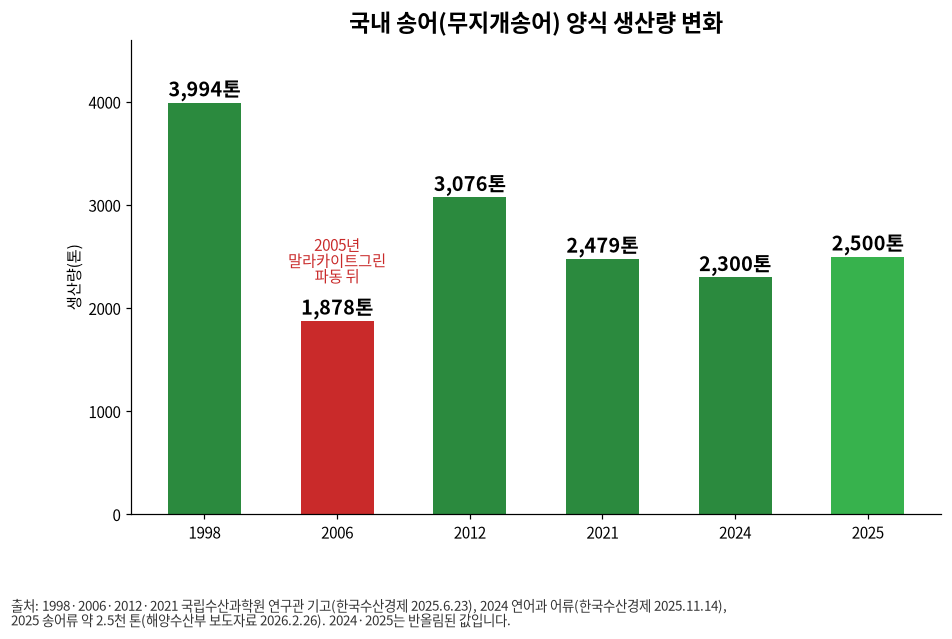
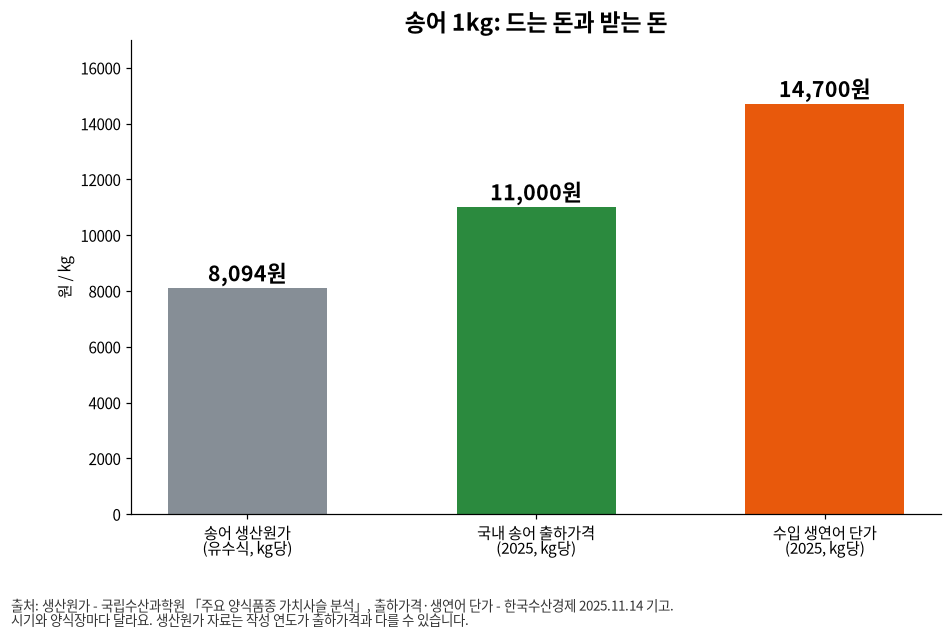
In one line: trout farming income depends on cold water, a permit, feed cost control and sales channels. Korea produced about 2,500 tons of trout in 2025. The farm-gate price was reported at about KRW 11,000/kg (2025 column), and NIFS analysis puts the production cost of flow-through farms at about KRW 8,094/kg. Results swing widely from year to year with heat, floods and fish disease.
1. What is trout farming?
You raise rainbow trout from fry (young fish) to food size in freshwater (inland) farms and sell them for sashimi or grilling.
Trout are cold-water fish. Their ideal temperature is about 15°C (±3°C) (Korea Fisheries Economy column, 2025-11-14). When water warms in summer, you must cut feed and add oxygen.
Korean trout farming began in Gangwon Province in 1965, and Gangwon still produces about 53%. Chungbuk, Gyeongbuk and Jeonbuk also farm trout (NIFS researcher column, Korea Fisheries Economy, 2025-06-23).
Most farms are flow-through systems that run stream or ground water through tanks. Recirculating systems (RAS) that filter and reuse water, and smart farms, are growing.
According to the Ministry of Oceans and Fisheries, inland aquaculture produced 44,000 tons in 2025, including about 2,500 tons of trout, up 200 tons (7.1%) from a year earlier.
2. How much does it cost to start?
There is no official average start-up cost. It varies a lot depending on whether you already own land and water (stream or ground water) and how many tanks you build. Key items:
NIFS publishes a free “Land-based Fish Farm Design Guide.” Read it before designing your tank layout and water flow.
3. Equipment and farming tips
Water management: measure temperature and dissolved oxygen every day. When water nears 20°C, trout get stressed, so reduce feed and increase oxygen and shade.
Emergency readiness: check backup generators and spare oxygen for power cuts, floods and droughts.
Feed control: feed is the biggest cost. Overfeeding fouls the water and wastes money; feed small amounts while watching how much the fish eat.
Disease prevention: fish diseases such as infectious hematopoietic necrosis (IHN), viral hemorrhagic septicemia (VHS) and white spot are problems in trout. Buy fry from trusted sources and report anything unusual to your local fisheries office or aquatic animal disease authority.
Only approved chemicals: after a banned substance (malachite green) was found in trout in 2005, production fell sharply. Never use unapproved chemicals.
Processing equipment (optional): a smoker, a fillet table and a vacuum sealer let you sell processed products. Food processing and sales permits must be checked separately.
4. How much can you earn?
Profit varies by farm with water conditions, feed prices, mortality and buyers. Published figures:
Farm-gate price: the 2025 Korean trout price was reported at about KRW 11,000/kg (Korea Fisheries Economy column, 2025-11-14).
Production cost: NIFS’s “Value Chain Analysis of Major Aquaculture Species” puts the cost of flow-through rainbow trout at about KRW 8,094/kg and recirculating systems at about KRW 7,301/kg, with feed as the largest cost. This analysis may be from a different year than the price figure.
Compared with imported salmon: imported fresh salmon cost about KRW 14,700/kg in 2025, more than Korean trout. Some experts see room for domestic trout to replace part of the salmon market. Korea imports about 54,000 tons of salmon a year (5-year average).
Example calculation: selling 10 tons a year at KRW 11,000/kg brings about KRW 110 million in revenue. Subtracting KRW 8,094/kg leaves a gap of about KRW 29 million. But mortality, feed price increases and loan interest change this a lot, so this is not an income promise.
5. How do you find buyers?
Sashimi and trout restaurants: supply restaurants directly. Keeping size and quality consistent matters.
Fishing ponds and winter festivals: trout fishing ponds and winter ice-fishing festivals use many live trout. The trout festival in Pyeongchang, Gangwon, is well known.
Direct sales and experiences: an on-site restaurant, catch-your-own fishing and online direct sales can bring higher prices.
Processed products: smoked trout, fillets, ready meals (HMR) and meal kits have been suggested as ways to compete with imported salmon (NIFS researcher column). Food business registration or permits are required.
Producer groups: groups such as the Korea Trout Farming Association share sales channels and information.
6. Steps to start 1-2-3
Learn and find water: take inland aquaculture or fishing-village settlement courses and work at an existing trout farm to learn the skills. Find land with enough cold water year-round, and check summer water temperature and drought-time flow yourself.
Get a permit: before building tanks, consult your city, county or district office on the land-based inland aquaculture permit (Aquaculture Industry Development Act Art. 43). Submit the application (Form 35), facility drawings (design and layout) and proof of ownership or right to use the site. Processing takes 5 days; apply in person or by post (Gov24). Check effluent treatment standards at the same time.
Start small and build buyers: begin with a few tanks and record mortality and feed efficiency. Line up restaurants and fishing ponds before harvest, then expand into processed products and direct sales once production is stable.
8. Watch out for these cases
In July 2025, heavy rain in Gapyeong, Gyeonggi Province, flooded streams, and about 120,000 trout at two farms were washed away or died. According to the report, one owner said trout farms were not covered by insurance, so he had to absorb the full loss (Yonhap News, 2025-07-21). Before you start, check that your land is not flood-prone and ask the fisheries cooperative (Suhyup) and local government whether your species can be covered by disaster insurance. Also be careful with offers that ask for facility or investment money upfront, claiming “just build tanks and earn every month.” Check the permit and visit the actual farm before signing anything.
Can I raise and sell trout in a small tank without a permit?
Raising fish on land for sale requires a permit from the mayor, county head or district head. Even if your farm is small, ask the local fisheries office first.
Why are so many trout farms in Gangwon?
Trout like cold water, and Gangwon's stream and ground water is cold and clean. About 53% of production comes from Gangwon.
What is the biggest cost?
Feed. The NIFS analysis also shows feed as the largest cost item.
I'm worried about summer. What should I do?
As water warms, cut feed, increase oxygen and shade, and check your backup generator. It is best to avoid sites where water gets too warm in the first place.
Are trout and salmon the same fish?
Both belong to the salmon family but are different species. Imported fresh salmon is mostly Atlantic salmon; Korean farmed trout is mainly rainbow trout.
Last updated: October 30, 2026. Based on official sources; rules and prices can change.
Abalone is one of the higher-priced shellfish farmed in Korean seas. Many farms raise it in sea cages (floating net compartments) off the south coast, such as Wando and Jindo in South Jeolla Province. Recently, however, production has grown and prices have dropped sharply, and summer marine heat (seawater getting too warm) sometimes kills stock all at once. This guide explains how to make money with abalone farming, based on data from the Ministry of Oceans and Fisheries (MOF), the National Institute of Fisheries Science (NIFS) and the national statistics agency. Look at the risks, not just the good points.
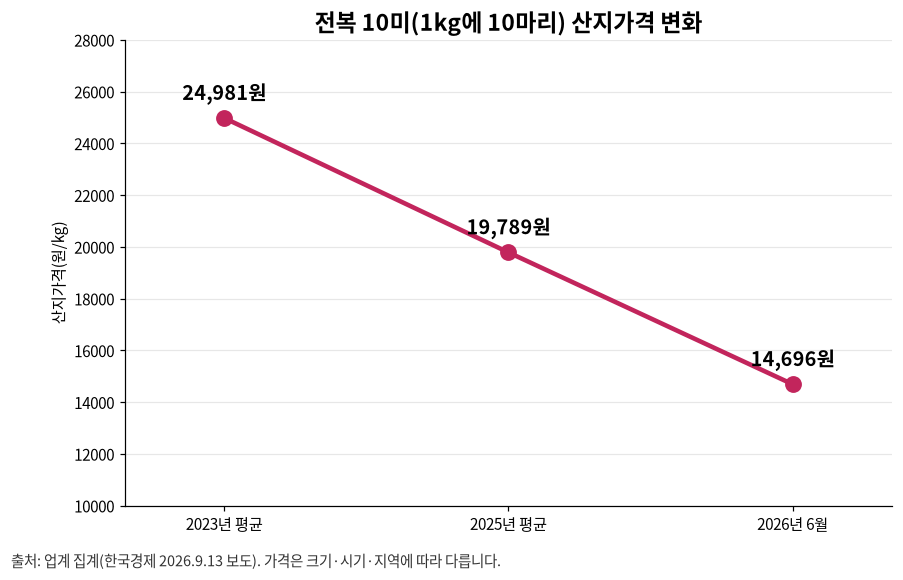
In one line: making money with abalone farming means “a license + 2–3 years of waiting + managing summer heat + a place to sell.” Output rose to about 27,000 tonnes in 2025, but the farm-gate price of size-10 abalone fell from KRW 24,981/kg in 2023 to KRW 14,696 in June 2026. Many regions have frozen new licenses, and leasing a farm license is illegal, so start your research through official channels.
1. What is abalone farming?
You buy juvenile abalone (seed) and raise them for about 2–3 years at sea or in land-based tanks until they reach market size (shell length about 8 cm or more) (NIFS abalone farming manual).
Article 10 of the Aquaculture Industry Development Act classifies raising shellfish such as abalone as shellfish aquaculture, with methods such as cage, hanging and bottom culture.
Farming at sea requires a license from the city mayor, county head or district head. A license lasts 10 years (Article 17 of the same Act).
Land-based farming in tanks requires a permit from the city mayor, county head or district head (Article 43).
Most Korean abalone comes from South Jeolla Province, where about 3,766 households farm abalone on 6,195 ha, about 80% of the national total (2024 report).
Moving to a fishing village to start sea work (returning to fishing) and laver farming on the same coast are separate topics, so this guide covers only abalone.
2. How much does it cost to start?
Costs vary so much by license, facility size and region that there is no official average. Here are the essential items and where to check.
Item
Details
Notes
Farming license or permit
Sea: license (10 years); land: permit
Ask the fisheries office of the city/county/district. Many regions have frozen new licenses
Fishing village cooperative (eochongye)
A group of fishers who share village fishing grounds
Membership rules differ by cooperative (Suhyup guide)
Cage facilities
Floating net compartments (about 2.4 m × 2.4 m each)
Need moorings strong enough for typhoons
Seed (juvenile abalone)
Bought from seed producers
Check that the seed is healthy
Feed
Seaweeds such as kelp and sea mustard
Plan your seaweed supply for winter to spring
Work boat and gear
For feeding, net changes and harvest
Check boat licensing and registration separately
Aquaculture disaster insurance
Covers typhoon and abnormal water temperature damage
Government pays 50% of the net premium (via Suhyup)
Business and tax
Business registration depending on how you sell
Hometax or tax office consultation
3. Equipment and how to work
Key points from the NIFS Abalone Farming Manual, in simple words:
Stocking density: in one 2.4 m × 2.4 m cage, the guide is about 2,300 abalone in year 1, about 1,500 in year 2 and about 1,100 in year 3. As they grow, split them into more cages so they grow well.
Feeding: give seaweeds such as kelp and sea mustard. Remove leftover feed before it rots.
Heat management: when seawater reaches 23°C, cut feed by half; above 25°C, stop feeding. August to October is the high-risk period for mass deaths.
Facility checks: before typhoons, check cage mooring lines and nets.
Keep records: write down the number of seed stocked, dates and deaths. Stocking records are needed to buy disaster insurance and to claim payouts.
4. How much can you earn?
Income from abalone farming differs from person to person. It changes a lot each year with license size, that year’s water temperature, death rate and selling price. Here are official and reported figures for reference.
Average income of aquaculture households: in the national statistics agency’s 2024 Farm and Fishery Household Economy Survey, aquaculture households earned an average of KRW 115,297,000, higher than capture-fishing households at KRW 44,188,000 (Korea Farmers & Fishermen Newspaper). But this figure averages all farmed species, including laver, so it is not abalone-only income.
Abalone prices: the farm-gate price of size-10 abalone (about 10 per kg) fell from KRW 24,981/kg in 2023 to KRW 19,789 in 2025 and KRW 14,696 in June 2026. Size-8 abalone fell from about KRW 45,000 in 2022 to around KRW 22,000–25,000 recently (Korea Economic Daily, 2026-09-13).
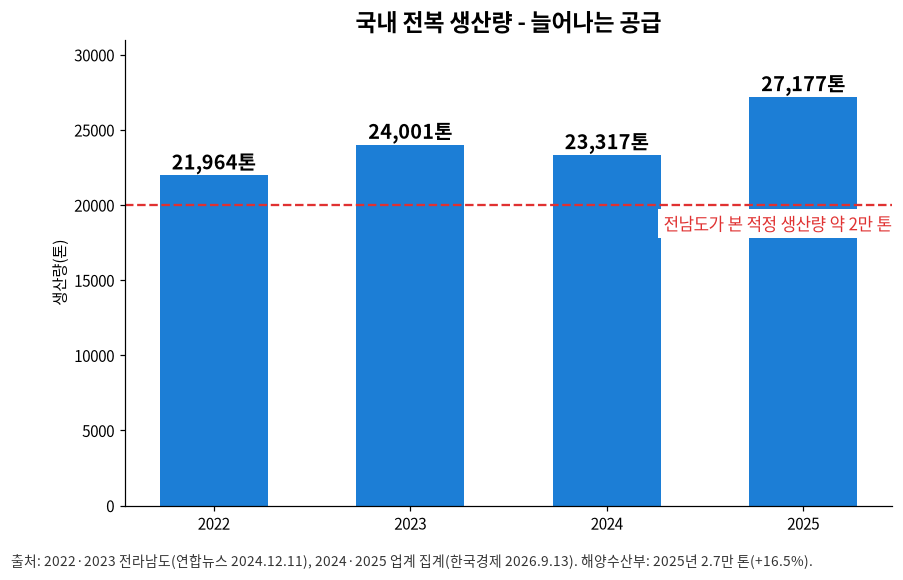
Why prices fell: 2025 production was about 27,000 tonnes, up 16.5% from the year before (MOF). South Jeolla Province considers about 20,000 tonnes the right national output. Exports rely heavily on Japan.
Simple example: selling 1 tonne of size-10 abalone brings about KRW 19.79 million at KRW 19,789/kg, and about KRW 14.70 million at KRW 14,696/kg. The same amount differs by about KRW 5 million depending on price. Subtract seed, feed, facilities, labor and insurance to get real profit.
5. How do you find customers?
Suhyup auction markets: many fishers sell through Suhyup (National Federation of Fisheries Cooperatives) auctions. Ask your nearest Suhyup about the process.
Distributors and middle wholesalers: they buy large volumes at once. Prices move with the market.
Direct and online sales: you can sell straight to consumers by parcel delivery or regional specialty online shops. Packaging and shipping that keep abalone alive are critical.
Processing: cleaned, frozen or ready-to-eat abalone can help when prices fall. Check food-related reports and permits separately for processed products.
Use promotion programs: when prices fell, MOF said it would use about KRW 1.99 billion in self-help funds (a promotion fund pooled by producers) for consumption campaigns, and push license conversion to other species plus an industry–government–research council (August 2025).
6. Start steps 1-2-3
Learn and check: learn about sea work through training and counseling at the Return to Fishing Village Center, and first ask the fisheries office of your target city or county whether new abalone farming licenses are available. News reports say South Jeolla has frozen new licenses and is converting some abalone facilities to laver.
Work on site first: work at an abalone farm and experience a full year, especially the summer heat. Learn cooperative membership rules and facility sale terms then. Secretly leasing a license is prohibited by law (Article 32).
Start small and insure: after you get an official license or permit, start small and buy aquaculture disaster insurance at Suhyup (the government pays 50% of the net premium; inquiries 1588-4119). Line up one or two buyers in advance.
8. Watch out for these real cases
“Invest in an abalone farm and earn 4% a month” scam: Korea’s Financial Supervisory Service said in 2012 that a company raising money by promising 4% monthly returns from a Wando abalone farm was an illegal unauthorized deposit-taking scheme, and it referred 59 such companies to investigators (Newspim report). This crime is punishable by up to 5 years in prison or a fine of up to KRW 50 million. Check any farm investment promising “guaranteed principal and high interest” with the FSS first (1332, fss.or.kr).
License rental offers: paying someone to “rent” you a license violates the law (Article 32), and you could later lose the facility.
Heat damage: summer marine heat repeatedly causes mass deaths. One reason 2025 output rose was “less heat damage,” which shows how much weather drives income.
No. Sea farming needs a license and land farming needs a permit (Aquaculture Industry Development Act, Articles 10 and 43).
Can I just borrow someone else's farm license?
Lending or leasing a license is prohibited by law (Article 32). Be careful with offers to "rent you a license."
How long until the first harvest?
Per the NIFS manual, it usually takes 2–3 years to reach market size. Feed and management costs continue during that time.
What if my abalone die in summer?
Abalone is a main item of aquaculture disaster insurance. News reports say abnormal water temperature damage is included in the main contract, but always confirm coverage with Suhyup before joining. Day to day, reduce or stop feeding at the 23°C and 25°C thresholds to limit losses.
Is now a good time to start?
Production has grown and prices have fallen, and many places have frozen new licenses. Decide on timing and scale only after talking in depth with the local fisheries office, Suhyup and the Return to Fishing Village Center.
Last updated: October 30, 2026. Based on official sources; rules and prices can change.
Korean gim (laver) is so popular worldwide that exports reached about USD 1 billion (USD 997 million) in 2024. More people are interested in laver farming, but you can’t farm in just any sea: you need an aquaculture license, and raw laver prices swing widely from year to year. This guide explains how to make money with laver farming in Korea in plain words, based on Ministry of Oceans and Fisheries (MOF) announcements, the Aquaculture Industry Development Act, and news reports. The key to making money with laver farming is: “secure a license (or a leased public farm) first, learn in a fishing village first, and prepare for price crashes.”
In one line: Laver farming requires a seaweed aquaculture license from the mayor, county head or district head, and new licenses are issued only within the government’s development plan. Exports grew, but in 2025 raw laver prices fell sharply from the year before, even leading to discarded harvests, so income differs greatly from year to year.
1. What it is
You install laver nets in the sea, attach laver spores (seeding), grow them, then harvest raw laver from winter to spring and sell it at Suhyup (fisheries cooperative) production-area auction markets and elsewhere.
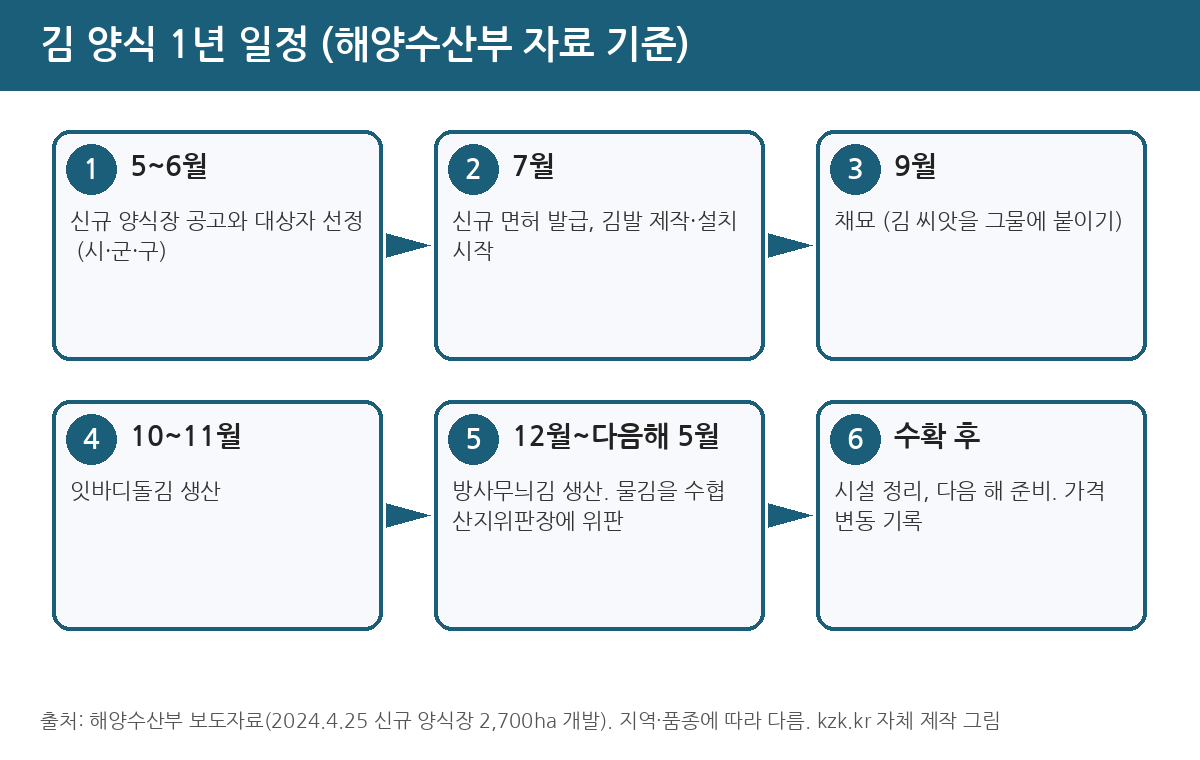
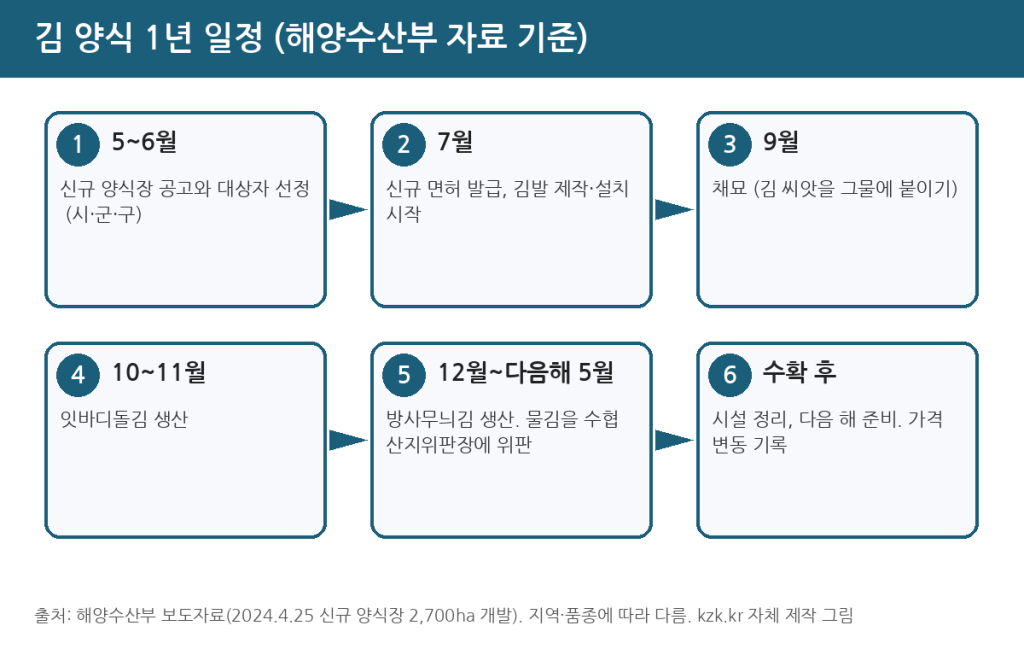
According to MOF, the usual schedule is May–June new farm notice and selection → July license and net installation → September seeding; Pyropia dentata is produced in October–November and Pyropia yezoensis from December to May of the next year.
In April 2024 MOF decided to newly develop 2,700 ha of laver farms and said it is developing new varieties resistant to high water temperatures. As of November 2025, total laver farming area is 66,204 ha.
Laver exports grew from USD 793 million in 2023 → USD 997 million in 2024 → USD 1.015 billion as of Nov. 20, 2025 (MOF), and one report put the 2025 full-year total at USD 1.13 billion (Korea Farmers & Fishermen Newspaper).
What to do
Details
Basis
Seaweed aquaculture license
Licensed by the mayor/county head/district head (provincial governor for offshore). Licenses only within government/local aquaculture development plans
Aquaculture Industry Development Act Art. 10
Ban on leasing
Aquaculture rights in principle cannot be leased to or from others. Exceptions include rights exercised by fishing-village association or cooperative members, and leasing by public institutions
Aquaculture Industry Development Act Art. 32
Public leased farms
Public institutions secure farms and lease them first to people returning to fishing villages, successor fishers and young fishers (effective June 28, 2023; notices on the website)
MOF press release 2023.6.13
Business registration
Apply within 20 days of starting
VAT Act Art. 8, Hometax
2. Start-up costs
We did not find official average start-up cost figures. Costs vary greatly with farm area, whether you buy a boat and equipment, and whether it is a leased farm (varies).
Item
Description
Note
Farm (license/lease)
New license or leased public farm
Check notice conditions, varies
Nets and facilities
Laver nets, poles/buoys, ropes
Installed and maintained every year, varies
Seed and seeding
Laver spores (seed) and seeding work
varies
Boat and equipment
Work boat, harvesting equipment
Sometimes shared in the village, varies
Labor and fuel
Workers during harvest, boat fuel
varies
Business registration
Hometax or a tax office
Within 20 days of starting
3. Equipment and work tips
Net installation and seeding: installing nets in July and seeding in September is the basic schedule (MOF). Missing it delays the whole year, so coordinate with the fishing-village association and experienced fishers.
Water temperature: MOF is developing varieties resistant to high water temperatures. Temperature changes greatly affect production, so keep checking information from local fisheries institutions.
Harvest and transport: raw laver cannot be stored and must be sold right after harvest, according to reports (Korea Farmers & Fishermen Newspaper). Adjust your harvest to the auction schedule.
No illegal facilities: illegal farming that expands facilities without a license is cited as one cause of price crashes. Install facilities only within your license.
4. How much can you earn?
In this research we could not confirm official statistics on average income per farming household. Income varies greatly with area, output and that year’s raw laver price (varies). Instead, here is the price trend:
In 2025, raw laver auction volume was 710,410 tons and value KRW 1.04023 trillion; the average price was about KRW 1,460 per kg, about 32% lower than the previous year (about KRW 2,160). At one point the price of one bag (120 kg) reportedly crashed from KRW 250,000 to around KRW 50,000 (Korea Farmers & Fishermen Newspaper, 2026.1.27).
In January 2025, the raw laver price at production-area auctions was KRW 762 per kg, 54% lower than the same month a year earlier (KRW 1,655), and 5,989 tons of raw laver (5,296 tons in South Jeolla) went unsold and were discarded that month (Yonhap, 2025.2.12).
In other words, strong exports do not guarantee higher raw laver prices.
5. How to sell
Suhyup production-area auction markets: raw laver is mainly sold by auction at Suhyup production-area markets. Check the auction schedule and that day’s prices.
Deals with processing plants: raw laver is processed into dried laver. In January 2025 dried laver sold for around KRW 145 per sheet (Yonhap). Discussing terms with processors in advance widens your sales channels.
Contract farming: after the price crash, contract farming was reportedly considered. Ask your local Suhyup or local government whether contract farming or purchase programs exist.
6. Getting started, step by step
Learn in a fishing village first: learn the work in a village that farms laver, and check the association’s membership conditions and the local farming schedule.
Secure a farm: check local governments’ new farm notices in May–June, or apply for leased farms announced by MOF and public institutions (priority for returnees and young fishers). Leasing aquaculture rights between individuals is in principle prohibited, so be careful.
Start small after licensing and registration: get a seaweed aquaculture license and register your business, then start small in the first year with July net installation → September seeding, and keep records of costs and auction sales.
Watch out for these reported problems
In January 2025, as raw laver prices crashed, 5,989 tons of raw laver went unsold at production-area auction markets and were discarded (Yonhap). Illegal farming that expanded facilities without licenses was cited as one cause, and producer groups claimed that unlicensed facilities reach 40% in South Jeolla (Korea Farmers & Fishermen Newspaper). Illegal facilities pull down prices even for fishers who honestly obtained licenses. Also, because leasing aquaculture rights is in principle prohibited, if someone offers to “rent you a farm cheaply” or “transfer a license to you” and asks for money first, be sure to check the license status with the fisheries department of the city/county/district office before signing anything.
No. Seaweed aquaculture requires a license from the mayor/county head/district head (provincial governor for offshore) (Aquaculture Industry Development Act Art. 10). Unlicensed facilities are illegal.
Can I rent someone else's farm?
Leasing aquaculture rights is in principle prohibited (Art. 32). However, there is a system of farms secured and leased by public institutions, with priority for returnees, successor fishers and young fishers.
What is the yearly schedule?
According to MOF: May–June notice and selection, July license and net installation, September seeding; Pyropia dentata is produced in October–November and Pyropia yezoensis from December to May of the next year.
Exports are strong, so can I earn a lot?
Exports grew, but in 2025 raw laver prices fell about 32% from the previous year, and some raw laver was discarded in January. Income differs greatly from year to year.
Can I store harvested raw laver and sell when prices rise?
Raw laver reportedly cannot be stored and must be sold right after harvest. That's why it's important to adjust harvest volume while watching auction schedules and prices.
Last updated: October 30, 2026. Based on official sources; rules and prices can change.
A fishing charter business (낚시어선업) takes paying anglers out to sea on a fishing vessel. Under Korea’s Fishing Management and Promotion Act you must file a report, and the boat, captain, insurance and safety gear all have set requirements. This guide explains how to make money with a fishing charter boat in Korea, based on the law and public-agency data.
In one line: more people fish from boats (about 4.96 million charter passengers in 2024), but accidents rose too (359 charter boats in accidents in 2024). Following the safety rules is how you protect the business.
1. What it is
The act defines the business as guiding anglers to fishing spots by fishing vessel, or letting them fish on board.
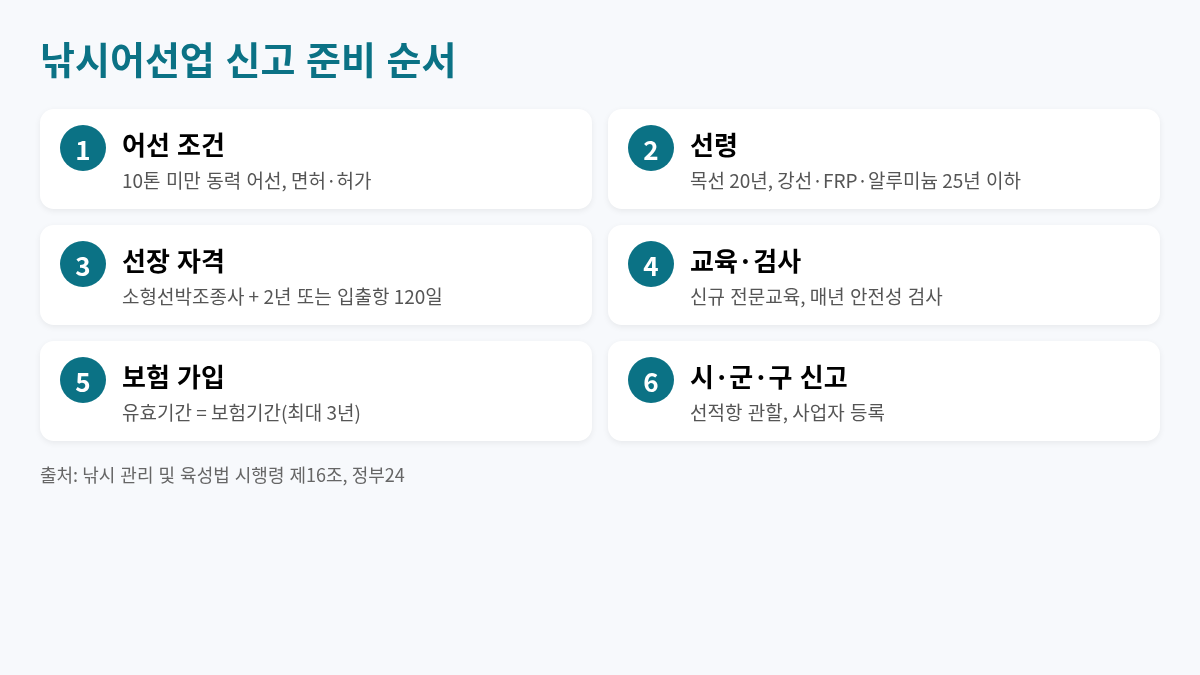
You file with the mayor, county head or district head of the boat’s home port.
Press reports of Ministry of Oceans and Fisheries figures put registered charter boats at a peak of about 4,500 in 2019 and about 3,900 now.
2. Who and which boats qualify
Requirement
Details
Boat
Licensed or permitted powered fishing vessel under 10 tons
Boat age
Wooden up to 20 years; steel, FRP or aluminum up to 25 years
Inspection
Pass the charter-boat safety inspection once a year
Captain
Small-vessel operator license or higher, plus 2 years’ service or 120 days of port entry/exit records
Training
Specialist training for first-time filers
Insurance
Passenger liability insurance or mutual aid is mandatory
The filing is valid for the insurance period, up to 3 years.
Passenger capacity follows the inspection certificate.
Government24 lists processing time as 2 days; the fee follows local ordinance.
3. Start-up cost and equipment
Costs vary by whether you already own a boat, its condition and the region; there are no official averages. Required safety gear under Annex 4 of the Enforcement Decree includes:
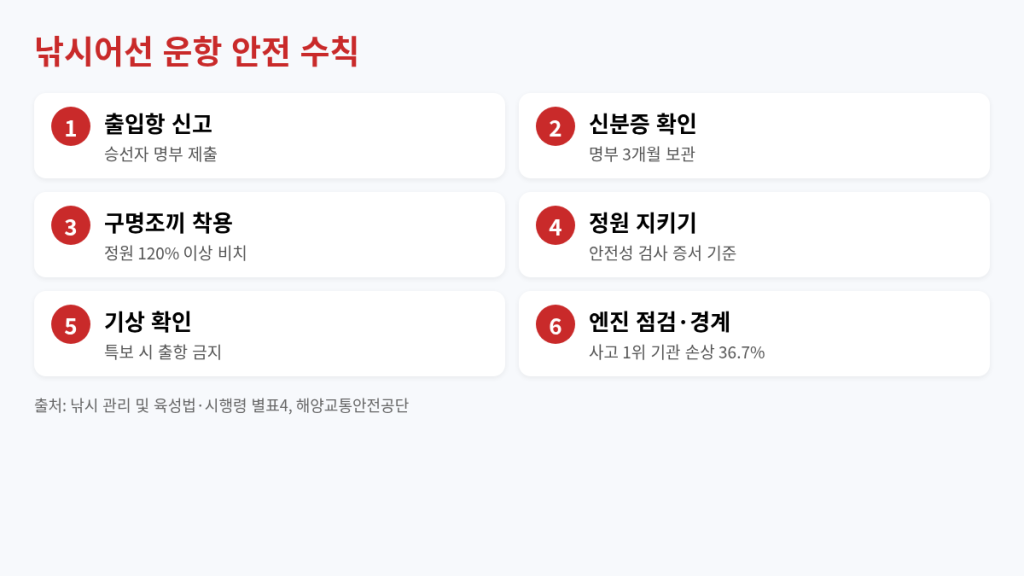
– Life jackets for at least 120% of maximum passengers, with child jackets for at least 20% of maximum passengers (Ministry of Government Legislation interpretation)
– Life rings for at least 30% of maximum passengers
– Other listed items such as extinguishers and communication or position gear
Other costs: insurance, fuel, maintenance, bait and rental tackle, booking and marketing.
4. Rules on every trip
Report departure and arrival and submit the passenger list.
Fill in the list by checking passengers’ IDs, and keep it for 3 months.
Make sure passengers wear life jackets.
Never exceed certified capacity.
Don’t sail in storm warnings or bad weather.
The Korea Maritime Transportation Safety Authority found the most common accident causes were engine damage (36.7%), collisions (14.9%) and entanglement with floating objects (14.7%), so check the engine before leaving and keep a lookout.
5. How much can you earn?
There are no official income statistics; it varies by region, season, target species and bookings. Reference figures:
– Charter passengers rose from about 2.95 million (2015) to about 4.96 million (2024).
– Autumn (September–November) is peak season, and 39.7% of accidents over ten years happened then.
– The fishing industry is estimated at about 2.7809 trillion won (2023), with about 7.2 million anglers.
6. Finding customers
List your boat on fishing booking apps and post trip schedules by species.
Post catch photos after every trip.
Partner with tackle shops and guesthouses.
Offer rental gear and basic coaching for beginners.
State your safety gear and insurance in your listing.
7. Step-by-step start
Check tonnage, boat age, licenses and captain’s experience.
Complete the training and pass the safety inspection.
Buy passenger liability insurance.
File with the home-port city, county or district office (see Government24).
Register your business with the tax office or Hometax.
On every trip: port reports, passenger list, life jackets.
Watch out for these problems
The safety authority’s analysis of 2015–2024 found 52 people dead or missing in charter-boat accidents, 27 of them in collisions, and accident boats rose from 174 to 359 a year. Overloading, no life jackets, drunk operation and risky departures lead to disasters and closures. Also be wary of sellers who say a used charter boat makes money right away; check the boat’s papers, age and permits with the local office and inspection body before buying.
“Gwieo” means a city dweller moving to a fishing village to start a fisheries business such as boat fishing, aquaculture, or seafood processing and distribution. The government offers training, counseling and start-up/housing loans for new fishers. This article explains how to make money with gwieo, based on official sources such as the Ministry of Oceans and Fisheries, the Return-to-Fishing-Village Center and the national statistics office.
One-line summary: Making money with gwieo follows this order: “counseling and training → moving to a fishing village and hands-on experience → starting fishing after checking licenses and permits → joining Suhyup and the fishing village society.” You can borrow up to 300 million won in start-up funds at a fixed 1.5% rate.
1. What is gwieo?
Moving from a city to a fishing village to run fishing, aquaculture, salt production, or seafood processing and distribution.
Fishing village businesses such as marine tourism and marine leisure are also eligible for government support.
There are criteria for being recognized as a “fisher” (see section 4).
Gwieo today
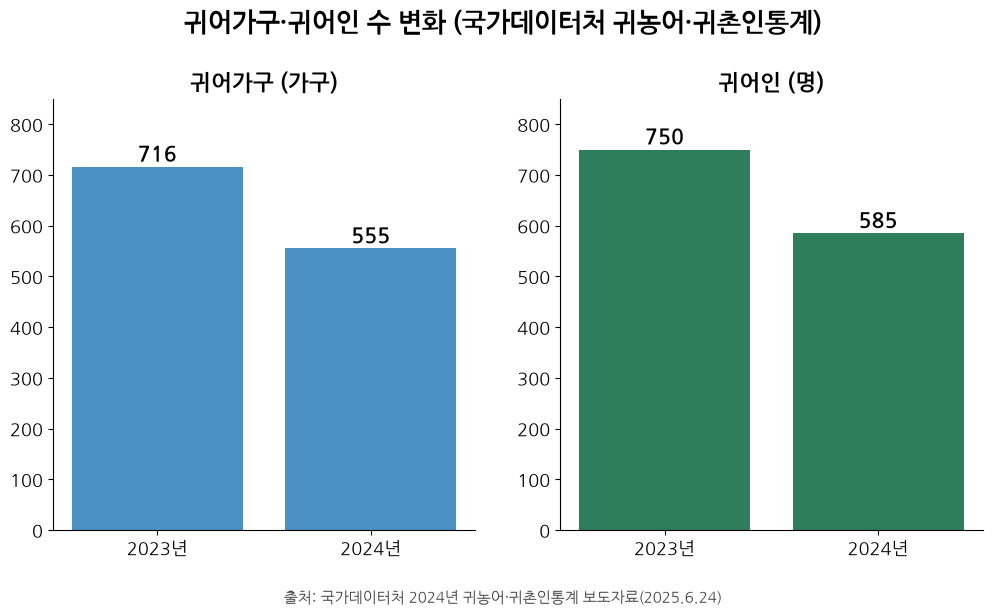
According to the national statistics office’s 2024 statistics on people returning to farming/fishing villages, gwieo households numbered 555, down 22.5% from the previous year (716), and gwieo individuals numbered 585 (750 the year before). Also, 180 people who moved for fishing over the past 5 years returned to cities, and 1,200 people who moved to rural areas started fishing. Since the numbers are small, careful preparation matters.
2. How much does it cost to start?
Costs differ greatly depending on what you do: buying a boat, renting a fish farm or finding a house all make a big difference, and I could not find an official average. Instead, there is a government loan program.
Item
Details
Note
Gwieo start-up fund
Loan up to 300 million won
Fishing, aquaculture, salt, processing, distribution, village business
Housing fund
Loan up to 75 million won per household
Purchase, new build, remodeling
Interest and repayment
1.5% fixed, 5-year grace then 10-year installments
Interest gap covered by the Ministry of Oceans and Fisheries
Boat and equipment
Boat, fishing gear, aquaculture facilities
Varies by fishery type
Housing and living costs
Early living expenses after moving
Needed until income starts
Loan eligibility (2026, per the Ministry and Gov24)
Gwieo fishers (including those planning to start) and non-fishers living in fishing villages, aged 65 or under. People 66 or older can also apply if they completed 35+ hours of gwieo start-up training by age 65 (training valid for 5 years).
The housing fund has no age limit, but non-fishers living in fishing villages are not eligible for it.
You must apply within 5 years of moving to a rural/fishing area, and you cannot get double support if you previously received gwieo or gwinong start-up/housing funds.
The loan is disbursed by Suhyup with collateral after the project is (partly) completed. Apply in person at the city/county/district fisheries department.
Application periods and remaining budget differ by local government, so check your city/county notice (e.g., Jindo County’s 2026 notice).
Aquaculture: A fish farm (license required), cages or lines, feed and management equipment
Processing and distribution: Space for cleaning and packing, refrigeration/freezing, a delivery vehicle
In every case, first check whether you need a fishery license, permit or report (Fisheries Act, etc.; see the National Law Information Center).
4. Fisher recognition and joining the fishing village society
Fisher recognition
According to the Ministry of Oceans and Fisheries, to be recognized as a fishery business operator you need annual seafood sales of 1.2 million won or more or at least 60 days a year engaged in fishing. You prove this with port entry/exit report days, fishing village society records, sales receipts, etc. The fisher confirmation is issued within 10 days and is valid for 3 months.
Joining Suhyup and the fishing village society (eochongye)
An eochongye is an organization that jointly manages village fishing grounds. According to the Ministry, at the end of 2016 there were 2,029 societies with 132,990 members.
According to Suhyup, to join a society you must be a member of the regional Suhyup (address or business in the area and at least 60 days of fishing a year) and live within the society’s area.
Process: application → society head → general meeting review → written approval → entry in the member list
Members have duties such as sharing costs and labor, and you can be expelled if you don’t use the society’s business for over a year.
Each village has its own atmosphere and rules, so talk with the society before you move.
5. How much can I earn?
According to the national statistics office’s 2024 Fishery Household Economy Survey, average fishing household income was 63.652 million won (up 16.2% year on year) and household spending was 35.821 million won. Average assets were 533.868 million won and debt 70.826 million won.
However, these are averages for all existing fishing households. Income for a new gwieo fisher varies widely by fishery type, region, catch, weather and market prices, and it may be low for the first few years.
6. How to find customers (selling seafood)
Suhyup auction markets: The basic route for selling your catch through auctions.
Direct sales: Online shops, local direct-sale stores, regular customers.
Fishing village tourism: Can be combined with fishing experiences, guesthouses and marine leisure.
7. Step-by-step start
Step 1 – Counseling and exploration
1. Call the Return-to-Fishing-Village Center (1899-9597, weekdays 09:00–18:00, run by the Korea Fisheries Infrastructure Public Agency).
2. Look for the exploration course and mentoring programs on the center’s website.
Step 2 – Training
1. Complete 35+ hours of gwieo start-up training (a loan condition for those 66+; also check the training requirements in your local notice).
2. Look into fishing village schools in Gyeonggi, Gangwon, Gyeongbuk, Gyeongnam and elsewhere.
Step 3 – Moving in and hands-on experience
1. Pick a village and try living there briefly or learn alongside local fishers.
2. Register your move and talk with the fishing village society.
Step 4 – Start fishing
1. Check and obtain the licenses, permits or reports for your fishery.
2. Acquire boats and fish farms through official procedures, and apply for the start-up loan at the city/county/district office if needed.
Step 5 – Join Suhyup and the society
1. Keep records of fishing days and sales to get fisher recognition, then join Suhyup and the fishing village society.
Watch out for these damage cases
The Ministry of Oceans and Fisheries warned of cases in which unregistered fishing-boat brokers took premiums and purchase money, and advised people to use registered fishing-boat brokers and the official fishing-boat trading system (www.어선거래.kr). There have also been news reports of fraud in which people took money for selling fishing permits and disappeared. When buying a boat or fishing rights, check the license/permit name and whether it can be transferred directly with the city/county/district office, and keep contracts and transfer records. Also be careful of places pushing expensive courses or consulting with claims like “gwieo makes you rich.” Official training and counseling are available from the Return-to-Fishing-Village Center.
The basic limit is age 65 or under. People 66+ can apply if they completed 35+ hours of gwieo start-up training by 65 (valid 5 years), and the housing fund has no age limit.
Is the start-up fund free money?
No. It is a loan at a fixed 1.5% rate, repaid in installments over 10 years after a 5-year grace period. Suhyup requires collateral.
What are the criteria for being recognized as a fisher?
Annual seafood sales of 1.2 million won or more, or at least 60 days a year of fishing, proven with port records, receipts, etc.
Can I join a fishing village society right away?
You must be a regional Suhyup member and live within the society's area, and pass a general meeting review. Conditions may differ by village.
I don't know where to begin.
Start with a phone consultation at the Return-to-Fishing-Village Center (1899-9597). They can guide you on training, mentoring and local information.
Last updated: October 30, 2026. Based on official sources; rules and prices can change.
How to Make Money Add to Home Screen
Tap the Share button ⎋, then “Add to Home Screen”.